Twiggs County Georgia
Misc. Biographies
DANIEL
H. ADAMS
Daniel H. Adams, clerk of the superior court, Macon circuit, Bibb County,
Ga., was born in Twiggs County, that State, January 28, 1834. His father,
Daniel Adams, a native of South Carolina and son of John Adams of North
Carolina, was born November 23, 1801, moved to Alabama in 1822, and in
1824 settled in Twiggs County, Ga., was one of its largest planters, and
there died in October, 1880. The mother of our subject, Mrs. V. Adams,
was born in Washington County, Ga., in 1805, and was a daughter of Ephraim
Ellis, who was a planter from Maryland. To Mr. and Mrs. Daniel Adams
were born eight children, of whom five were reared to maturity, as follows:
Obadiah F., E. Bennett, Daniel H., Robert R. and George B.; three girls
died in infancy. Daniel H. Adams, at the age of ten years was taken from
Twiggs to Houston County, where he was educated, going to the academy of
Professor James Dunham for sever years, and to that of Prof. Henry Hudson
two years. At the age of eighteen he commenced clerking in the store of
Lightfoot & Flanders, remaining from 1852 until 1853; he was then employed
by the Confederate Government as cotton shipping clerk, in which capacity
he served until the close of hostilities in 1865. He then became connected
with the firm of McGrath & Patterson, at Macon, with whom he remained
one year, when he began speculating in cotton, etc., operating another
year. In the spring of 1868 he returned to the old firm, which had changed
its style to D. Flanders & Son, with who he remained until May, 1885,
at which time he became deputy clerk, which position he filled until August,
1886, when he was elected clerk proper, and is the present incumbent of
the office. During all these years of clerking, for twenty eight years
he was also a magistrate. July 8, 1857, he married Miss Helen E. Snow,
of New York City, and has been blessed with a family of eight children,
born in the following order: Fannie, William H., Julia, Daniel E., Charles
B., Laura, Mollie and an infant not named at the time of this writing.
Mr. Adams is a Knight of the Golden Rule, and his wife of the Episcopal
Church. Biographical Souvenir of the States of Georgia
and Florida. Chicago, IL: F.A. Battey & Company, 1889.
CHRISTOPHER
C. ANDERSON
Christopher C. Anderson,
civil engineer, Hawkinsville, was born January 7, 1840, in Twiggs County,
Ga. His parents are Thomas W. and Susan (Roach) Anderson. Susan Roach was
a native of Georgia. Thomas W. was born in St. Augustine during the Spanish
occupation of that colony. The children born to these parents were three:
George, Susan F., wife of J. M. Gatewood, living in Albany, Ga. and christopher
C. Our subject was one of forty-three who graduated at Mercer College while
the same was located at Penfield, class of 1861. He enlisted in Company
_, Sixth Georgia Regiment of Infantry, Twiggs Guards, in 18_,. Later he
served in Blunt's battalion of Light Artillery. He saw service in twenty-eight
pitched battles, besides skirmishes. Twenty-six years ago this day (April
5, 1888), he heard the first bomb shell, and saw the first Yankee soldier.
The sound of that shell was music, sweet music to his ears. He had been
lying idle so long and drilling he was anxious to get to business; but
before the war closed the sound of that death-dealing instrument had lost
its charms. That night he saw for the first time a limb amputated. The
different battles in the order of their occurrence were as follows: Siege
of Yorktown, Williamsburg, Seven Pines, Mechanicsville, Cold Harbor, Savage
Station, White Oak Swamp, Malvern Hill, Boonsboro or South Mountain, Sharpsburg
or Antietam (in his opinion the hardest fought battle of the war), Fredericksburg,
and again under General Hooker, Wilderness, Chancellorsville, battery Wagoner,
Fort Sumter siege, James Island, Ocean Pond, Petersburg, Drury's Bluff,
Cold Harbor (june 1, 1864), same June 3, Petersburg (june 16, same June
28, Petersburg blow-up (July 31), (April 7, 1863_, Petersburg, same April
2. He surrender at Appomattox. At Ocean Pond was shot in the side and returned
home on sixty days' furlough. At Petersburg was wounded twice, not seriously.
He was never taken prisoner, and his general health was splendid. The war
closing, he taught school one year, then went to civil engineering, in
which he has been quiet successfully engaged ever since. he was married
December 13, 1865, to Miss Laura, daughter of Joseph and Mary j.
(Johnson) Tooke, of Houston County. Several times has their home been made
happy in the birth of children, as follows: Charles E., on the telegraph
corps at Macon; Lela, Thomas W., Payton, Marie L., Alma and Julia. Mrs.
Anderson is a member of the Baptist and her husband a member of the Episcopal
Church. Biographical Souvenir of the States of Georgia
and Florida. Chicago, IL: F.A. Battey & Company, 1889.
ROBERT AUGUSTUS BEALL
was born in Prince County, Maryland, November
16th 1800. His father moved to Georgia in 1808 and settled in Warren county,
where Robert was reared. He received his education at the common schools
in Warren and at the age of 15 was sent to Raleigh, N.C. where he completed
his education. He studied law in Georgia in the office of Judge Montgomery
in Augusta and was admitted to the bar at the age of 20. He moved
and practiced law in Marion, Twiggs county, in partnership with Judge Thomas
Holt. When Judge Holt was promoted to judgeship of the superior court
in 1824, Beall, by executive appointment, succeeded him as solicitor for
the district. Robert Beall was "ambitious, a man of rare genius-ardent
in his temperament and fearlessly brave, and of course had positive friends
and implacable enemies." Twiggs county politically was almost equally divided
on both sides; prominent among these were the Wimberlys and the Glenns,
and every election for every office in the gift of the people was closely
contested. "
"A foe of his ambitious as
himself and quite as brave, was Thomas Mitchell (South Carolina native)
of Twiggs. At the dinner table of Martin Harden, Beall spoke freely and
bitterly of Mitchell. " A consequence of this was a duel where
two shots were exchanged, and by the interference of friends the two uninjured
duelists left the field uninjured.
Soon after the duel, he ran
for the legislature, a member of the States Rights party, from
Twiggs but was defeated by Robert Glenn. "Before the meeting of the
legislature in 1825 Moses Fort resigned his position and Beall was elected
for the position. He was re-elected in 1826." He "moved to Macon
where he had a large plantation and slaves. Didn't do well in planting,
became embarrassed with debt. sold his plantation". His "passion for gambling
was his ruin and he died Died July 16th 1836, at age 36. Sources: W. H.
Sparks, Atlanta Constitution, 6-25-1881;
ALLEN FRANKLIN
BECKOM
Among the most widely known and respected of
the earlier settlers of Twiggs county stands the name of Wm. Beckom,
the grandfather of the above-named gentleman. A native of Washington
county, he came to Twiggs when quiet a young man and bought large tracts
of unimproved land, all of which he merged into one plantation. In time
his possessions became very valuable, for in addition to his landing estates,
he owned numerous mercantile establishments. Though not soliciting political
favor he was largely instrumental in bestowing the same on many of his
friends, among whom were number some of Georgia's most distinguished men.
His death occurred April, 1839. His wife, who was Miss Dolly Nusum, a member
of an old and prominent family of Georgia, died in 1829. Their family consisted
of nine children: Sherwood, Amanda, Mary, Sarah, Allen and Solomon
G., all deceased. Those living are: Simon N., removed to Texas, 1859; Susan,
Mrs. Hardin T. Smith, and Laban. The last-named, the fourth child and twin
of Sarah, is the father of Allen F. Beckom, and was born Dec. 4,
1808, in Washington county, Ga. He was reared on the old family plantation
and received such education as the schools of that time afforded. Like
his father, he followed the occupation of planter, and going to Twiggs
county, he located on a plantation there. Married to Sarah, daughter of
John Faulk, they became the parents of the following children: Amanda H.,
Mrs. Dr. Richardson; Allen F., W. H., Thomas and Susan, who are dead. Allen
F. was born in Twiggs county Dec. 23, 1837. His school days were spent
at Griffin, where he acquired a good education. At the age of twenty-four
he enlisted in James M. Folsom's company, Twiggs volunteer infantry, but
soon after active service began, illness caused his return home. After
his recovery he became a member of the state troops and took active part
in many engagements, having had command of a company at the battle of Griswoldville.
The battle was particularly fierce, many being killed or wounded. However,
good fortune attended Mr. Beckom and he escaped without a wound. Returning
from the war he settled on the plantation, and in 1868 was united in marriage
to Mrs. Ella Johnson (nee Wiggin), daughter of Mary S. and W. W. Wiggin.
One daughter came to bless the union, Ella G. Mr. Beckom is a true democrat
and a member of the M. E. church. He devotes his entire time to the cultivation
of his large plantation of 2,500 acres. He is spoken of as one of the most
successful agriculturist in the county.
Memoirs of Georgia Volume
1 Historical Society of Georgia, 1895
ISAAC BROWN
"You say you have seen the old lady, the mother
of (Capt.) Isaac Brown. I never
saw her but once, and that was in Twiggs county, Ga., about the last of
February, 1818. It was at her own house. I called there to get Isaac to
go with me into Florida, as I had been ordered by General Jackson to collect
as many Indians as I could and join him at Fort Scott. Isaac had no horse
that was suitable for the trip. I left my horse with Gen. Wimberly, and
we took it on foot to Fort Early, trusting to Providence for horses after
that. When we were about to leave, the old lady said, "Isaac, my son, the
Indians killed your father,
and may kill you, but I had rather hear
of your being killed than to hear that my son had acted the coward." This
is all the acquaintance I ever had with the old lady; but I have had her
history from many that knew her well. When Isaac was an infant, his father,
who was a fearless man, crossed the Oconee river near what is known as
the Long Bluff. The Oconee was then the line between the whites and Indians.
Brown built him a house, and was preparing for stock raising. He always
kept on hand a number of loaded guns and some fine dogs. One morning about
daylight his dogs commenced barking; he opened the door to look out and
was shot dead by an Indian, who had secreted himself near the house. At
the report of the gun, the Indians raised the yell. Mrs. Brown drew her
lifeless husband into the house, shut the door, and commenced firing at
the Indians, and succeeded in driving them off. They soon returned, and
set fire to a board shelter attached to the house. She climbed up the wall
on the inside; and with a basin of milk extinguished the fire; and while
in the act of pouring the milk on the fire, with her arm projecting through
the log, the Indians shot at and broke her shoulder. With one arm and the
aid of a small boy, the son of one James Harrison, she succeeded the second
time in driving the Indians away. She then escaped across the river with
her children. A company was collected and repaired to the house, and they
said it had not been a sham fight, for they found the white man in the
house shot dead, and not far from the house two dead Indians, and not far
from their trail were discovered signs as though they had been dressing
wounds. Now you can account for Isaac Brown's being a soldier as easily
as to account for Lexington and his half-brother, Lecompte, being race
horses--it's in the blood. The boy that was with Mrs. Brown, was the son
of James Harrison, who was a man of great daring and had suffered much
from the Indians, and they in return had suffered much from him. He was
the man who killed the father of the present speaker of the Creeks, Hopothleyoholo,
and was known to the Indians as Epha Tustanugga, or Dog Warrior, and to
the whites as Davy or David Cornels. Davy Cornels, I suspect, was the cause
of more mischief done to the whites by the Creek Indians than any man that
ever lived in the nation. He was troublesome during the Revolution and
long after. While Seagroves was agent, Cornels sent him word that he wished
to be at peace, and would meet him at Colerain, not a great way from St.
Mary's. Seagroves unfortunately let it be known that he was expecting a
visit from Cornels. Harrison heard of it, collected a few men, and I suspect
Brown's father among the rest. All had suffered long and much from the
depredations of Cornels and his men; they knew his path; they watched it
closely, and one day as he approached them with a white flag, Harrison
killed him. So ended the life of the most bitter enemy the whites ever
had among the Creek Indians, Sowanoka Jack excepted."
Woodward's reminiscences of the Creek
or Muscogee Indians, contained in letters to friends in Georgia and Alabama
/ by Thomas S. Woodward, of Louisiana (formerly of Alabama) ; with an appendix
containing interesting matter relating to the general subject
JAMES
CLEMENT BURNS
James Clement Burns was born March 7, 1840,
and died Jan. 8, 1894. He was the son of James C. and Belle Burns. His
father's death occurred in 1861, and his mother, whose maiden name was
King, died in 1869. They left four sons and two daughters. Two of the sons,
Joseph K. and Francis M. Burns and the two daughters, Mrs. G. A. Glover,
and Mrs. F. B. Floyd, still survive them. The boyhood days of James C.
Burns were passed on his father's plantation in Twiggs county, where he
received a common school education. When older he attended school at Hot
Springs, Miss. On returning home he became actively engaged in farming
on an extensive scale, and was one of the most prominent and successful
planters in Twiggs county. In 1861, Mr. Burns married Mrs. Mary Ellen Hall,
a daughter of Joseph Williams, a prominent planter of South Carolina. To
this marriage no children were born. At the time of his death he had accumulated
quite a large property, the result of a life of honesty and industry. Though
not a professed member of any church, he lived an upright, exemplary life,
ever ready to contribute liberally to any charitable project, never turning
a deaf ear to the appeals of the poor and needy, but always acting in a
liberal but unostentatious spirit; charitable and generous to a fault;
a stanch defender of the right, and always frowning down and spurning
corruptions and immorality in any and all places. In politics he was a
lifelong democrat, and took an active interest in political matters, though
he was in no way considered a politician. His wife, two brothers
and two sisters survive him. Memoirs
of Georgia Volume 1, Historical Society of Georgia, 1895
BENIAH
S. CARSWELL
Jeffersonville, for many years a practicing
physician of this place, who devoted a lifetime to the amelioration of
the ills of mankind, died June 1, 1895, mourned by all who were fortunate
to know him. Dr. Carswell was born in Telfair county, Ga., Nov. 26, 1830,
the son of Alex. Carswell. The latter gentleman was born and reared in
Louisville, Jefferson Co., while the town was the capital of the state.
He became a planter and later in life moved to Twiggs county, where he
died in 1853. Dr. Carswell was but six years of age when his parents removed
to Twiggs county. This was in early days, indeed for Jeffersonville at
that time had not even entered the mind of man. The town was afterward
laid out, and an academy established, the site being called Jeffersonville
in honor of a noted teacher of the county, Jefferson Bryant. The academy
was a marvel in its day. Here Dr. Carswell was reared and educated, and
selected medicine as a profession, began its systematic study. He graduated
at Jefferson Medical college, Philadelphia, in 1851, but being conscientiously
opposed to entering upon the active practice of so important a profession
as that of medicine without thorough training, he continued his post graduate
study until 1856, when he located at a point now known as Allentown. After
three years he removed to Jeffersonville, and afterward practiced from
that point. The doctor was twice married and reared an interesting family
of children of whom he was justly proud, they having received readily and
creditably an excellent education. The doctor's first consort was Carrie
C. Sears, of Allentown, whom he married Aug. 26, 1858 while she was not
yet fourteen, and who became the mother of five children: Carrie Lela,
Mrs. Jas. Evert; Eli S. (deceased); De Witt, Twiggs county; Robert (deceased
at fifteen); and Cornelia, Mrs. Wm. Booth, Pulaski county. The mother of
these children was called to her reward Nov. 19, 1880, and on Dec. 15,
1881, Miss Mattie R. Harrell became the doctor's wife. Although reared
in the principals of whigism the doctor bowed with the best grace possible
to the inevitable and entered the democratic party after the war, and with
which he affiliated until his death. Profoundly religious from his youth,
he early united with the M.E. church, of which he was a faithful working
member from his fourteenth year.
CAPT. WILLIAM
E. CARSWELL
planter, Jeffersonville. This prominent citizen
of Twiggs county is a descendant of a family always, and wherever found
of wide influence and of fine character. The above gentleman's paternal
grandfather Matthew Carswell, was a native of Jefferson county, Ga., his
father before him having emigrated from Ireland. he was a planter of large
means, his chief moral characteristic having been his intense loyalty to
the Methodist church. He married and reared five children: James, Alexander,
Wm., E., Samuel M., and Sarah. Of these Wm. E. was the father of Capt.
Carswell. He was born in Jefferson county in 1807m received a superior
education for those early times, and was from many years a prominent educator
in his section. He married Elizabeth J. Gilbert of Wilkinson county, who
bore him five children: John, Rufus, Eugenia, James, and W.E., four of
whom died in infancy. William E. Carswell was a man of fine intellect and
during his lifetime accumulated a fine property. He was in political belief
a disciple of Henry Clay, and a devoted member of the Missionary Baptist
church. He died in Wilkinson county, where he had passed his life, in 1887.
Capt. William Edward Carswell was the youngest child and was born Nov.
5, 1836, in Wilkinson county. He was educated at Jeffersonville academy,
and has passed his life as a planter. In 1861, he enlisted in the Carswell
guards, a company so called in honor of his father, who equipped them at
his own expense. Third lieutenant at the outset, promotion soon came to
him and he led the company as its chief officer during the major part of
the war, participating in a number of engagements, and received several
serious wounds. The principal engagements were Malvern hill, Roan
station, Gettysburg, where he received a ball in his left leg. Petersburg,
where he was wounded, Sharpsburg, Cold harbor, Wilderness, Chancellorsville,
and many minor engagements. His marriage was consummated while on furlough
in 1863, Dec. 16, with Miss Anna, daughter of John Chapman, of Twiggs county.
He located in Twiggs county after the surrender, but soon returned to Wilkinson,
where he remained until 1875, when he settled on the plantation he now
cultivates. This consist of 1,200 acres of choice land, which, together
with his other real estate interests will aggregate thousands of
acres. A democrat, but not a politician, Capt. Carswell affiliates in religion
with the New Providence Baptist church. A large and interesting family
of children have been and are being reared about his hearthstone, in whom
the captain feels a just pride. Their names are: Eugenia, married; Laura
L.; Mattie M.; Mrs. Dr. W. A. Daniel, state physician during Gov. Northen's
administration; Anna T.; Iverson C.; Elizabeth; Wm. R.; and William E.,
Jr., deceased. Memoirs of Georgia Volume 1Historical
Society of Georgia, 1895
ASHLEY
B. COOMBS
the able superintendent
of the Georgia penitentiary farm, near Milledgeville, Baldwin county, was
born on a farm in Twiggs county, Ga., Jan. 26, 1859, a son of James R.
and Sarah E. (Boothe) Coombs, the former born in Twiggs county, in 1820,
and the latter in Pulaski county, in 1833. The father was a successful
planter and his death occurred in 1873. His widow is still living and resides
in Pulaski county. Of the five living children the subject of this sketch
is the only son; Mary S. is the wife of H. S. Wimberly, of Telfair county;
Charlotte T. is the widow of J. A. D. Coley, of Pulaski county; Elizabeth
M. is the widow of L. T. Peacock, of the same county; Zilpha H. is the
widow of W. H. Frazier and likewise resides in Pulaski county. Ashley B.
Coombs secured his education in the schools of Twiggs and Wilkinson counties
and in Mercer university, and has been identified with agricultural pursuits
from his youth up, so that he is well fitted for the responsible duties
which devolve upon him in his present official capacity. He began farming
operating on his own responsibility several years before attaining his
legal majority, and in time became one of the most successful, progressive
and popular planters of Pulaski county, his reputation in the regard leading
to his appointment to his present office, in October, 1903, at the hands
of the state prison commissioners. He has fully justified the wisdom of
the commissioners in making the appointment, and is doing a most efficient
work in managing and directing the affairs of the state farm. In 1905 he
produced on the farm 457 bales of cotton, the highest previous record having
been 352 bales. The farm comprises 5,000 acres, about seventy plows are
operated on it and it is being brought into model condition under the present
superintendent. Mr. Coombs is a Democrat in his political adherency
and he and his wife are members of the Baptist church. On March 1, 1880,
he was united in marriage to Miss Charlotte Elizabeth Plane of Charlston,
S. C., and they have six children, namely: Annie S., Charlotte P.. James
R., Ira Dupree, Mary D., and Ashely B., Jr. Annie S. is now the wife of
O. N. Maxwell of Baldwin county, and Charlotte P., is the wife of R. J.
McGriff, of Pulaski county.
Source: Georgia:comprising
sketches of counties, towns, events, institutions, and persons arranged
in cyclopedic form ... Allen Daniel Candler, Clement Anselm Evans. State
historical association, 1906
Note: Ira DuPree Coombs married Eleanor
Eason of McRae, Ga. June 5, 1909. Ashley Coombs resigned his position as
Superintendent of the Prison Farm Oct. 1, 1909 and was replace by J.M.
Burke of Wilkinson Co.
WILLIAM
A. DAVIS
Hon. William A. Davis,
senior member of Davis & Balkcom, warehousemen and general grocers,
was born in Bibb County, Ga., April 4, 1847. The Davis Family is descended
from John Davis, Sr., who came from England in an early day-married a widow
by the name of McCormick, and subsequently took part in the Revolutionary
war, being killed in the battle of Brandywine. John Davis, Jr., his son,
was at the time of this battle two years of age. Some years later he married
Miss Rebecca Jones of Virginia. They moved to Burke County, Ga., in 1800,
where his son, Judge Elisha Davis, the father of William A. Davis, was
born in 1805. From Burke he moved to Twiggs County in 1815, being one of
the old pioneer settlers of his adopted county. Mr. Davis was a planter
and a man of great influence. He represented his county in the legislature
at Milledgeville in 1856, and was judge of the superior court for many
years. In 1834 he married Miss Mazie G. Parker. a native of Twiggs County,
Ga. This lady, the mother of our subject, is still living, a devoted member
of the Baptist Church, at the advance age of seventy-two years. Her people
were from North Carolina. They moved to Twiggs County in 1816. Judge Davis's
death occurred in 1866, at the age of sixty years. He also represented
the faith and doctrines of the Baptist Church. These parents had nine children:
Benjamin F., deceased; John N., Gilbert M.., Rosa V., now Mrs B. T. Ray;
Cordelia, deceased; William A.. Robert E., died at the age of twenty-two
years; David P., died at the age of two years, and Mollie, now wife of
Rev. G. W. Tharp. Three of the brothers served in the late war, John N.,
served for a time as a private in the Bibb Cavalry, and subsequently was
transferred to another command. He was a good soldier, brave and true.
Gilbert M. commanded the Bibb cavalry and surrendered with the same. He
served the entire time; was in every battle in which the command was engaged;
was an excellent soldier, and was never known to shrink from duty, or to
be absent in time of engagement. William A., enlisted at the age of sixteen,
and served more that two years. He served with the Georgia regulars - cavalry;
was in the battles of Mission Ridge, Chickamauga, and in all the Atlanta
campaign. Neither of the brothers was wounded or taken prisoner.
William A., our
subject, received his education in Twiggs County, his instructor being
J. E. Crossland, who had a reputation second to only one as the best teacher
in the State. He began business as a planter at the early age of nineteen
years. About the time his father's death occurred, and our subject was
appointed the administrator (though under age) at the urgent request of
the other members of the family, and by appointment of the court of
ordinary. The estate was encumbered to the amount of $10,000. He could
have taken advantage (and was expected to do so) of the homestead relief
law, but this, though urged even by his creditors, he refused to do. It
took several years of very nice work and good management to accomplish
this, but he paid every dollar of the indebtedness; thus releasing the
moral as well as the legal obligation. In this transaction he kept in view
the maxim of Edwards, which was. "Money is an essential element of power.
Character is the means of obtaining money from others when we have it not
of our own. Character, therefore, is capital, and the loss of it is the
most disastrous species of bankruptcy, since it may find us unable to help
ourselves, and destitute of the means of obtaining help from
others." At the age of twenty-nine he was elected to the State legislature.
Here it may be said in all truth that his official services were efficient,
and in harmony with his well known principles of fidelity to a public trust.
He served on term and declined re-election. He has been alderman of the
city for six years (three terms of two years each), the last two terms
receiving the largest vote. The last time he received more votes
that any man ever received for the same office in this city. For four years
he has served as mayor pro tem. In his six years as alderman he has missed
but four meetings, and then because he was absent from the city. He
has also represented the city in minor positions. He has represented the
county in the State Agricultural Association, of which he is now a member.
He was married in 1869 to Miss Mary R. Summers, daughter of J. W. and Susan
(Barlow) Summers, of Laurens County, Ga. Mrs. William A. Davis was educated
at Auburn, near Lewiston, Me. Her father, J. W. Summers, was a native of
Georgia. He was a successful planter, and a person of character and influence.
The children of William A. and Mary R. Davis are: Hattie, who is now a
senior at the Wesleyan College; Edwin, who is in the preparatory department
at Mercer; Mabel and Gussie. Mr. Davis is senior warden in the Blue Lodge;
king in the Chapter; senior warden in the Scottish Rites Masons, and has
been generalissimo of the Knights Templar order. He was also first vice-president
of the Public Library and Historical Association. Mr. and Mrs. Davis are
member of the Baptist Church, the former being a deacon in the same for
several years. Mr. Davis is classed among the honest, responsible, well-to-do
business men of the city. He has an enviable reputation in good character
and square dealing. Biographical Souvenir of the States
of Georgia and Florida. Chicago, IL: F.A. Battey & Company, 1889.
JARED SANDERS DENNARD.
MISSIONARY TO AFRICA.
"The author acknowledges his indebtedness
to Mr. John Smith, father-in-law of Mr. Dennard, for the use of papers
and letters which are of inestimable value to his family, and which are,
of themselves, exceedingly interesting. Among these is a sketch by Rev.
A. T. Holmes, D. D., of which he makes free use, as if written by himself.
No man was better qualified for the task than Dr. Holmes.
The subject of this notice was born in Twiggs
county, Georgia, October 28, 1818, where he was educated in an excellent
academy, under Mr. Milton Wilder. In 1834, he removed with his parents
to Houston county, and soon joined a company of volunteers, raised to protect
the settlements from hostile Indians. He served as a soldier about three
months, and secured the confidence of his companions by his fearless and
manly deportment. On his return home, after spending some months without
any positive employment, he studied law under Kelly & Rice, in Perry,
and was admitted to the bar July, 1839. He continued the practice of law
about five years, and his friends were encouraged to hope that he would
distinguish himself in the honorable profession which he had chosen. But
"He who worketh all things after the counsel of his own will," and who
makes kings, as well as soldiers and lawyers, his willing subjects in the
day of his power, had other and more important work for him to do. Some
time in the spring of 1845 he was made to feel that he was a guilty sinner.
Under his deep convictions, he mingled with the people of God and listened
to the preaching of the gospel as one who felt that he had a special interest
in the glad tidings which it proclaims. In good earnest he sought the forgiveness
of sin through the blood of Christ, and was soon enabled to rejoice in
an humble hope of peace with God.
In the commencement of his christian career,
he seemed to realize, in a peculiar manner, the spirit of the Apostle,
and his inquiry was, "Lord, what wilt thou have me to do?" To submit to
the authority of his Divine Master, to obey his commands,
and to consecrate himself to his service,
seemed to constitute the spirit of his religion. He took a high position
at once as a christian, and secured fellowship with the people of God,
as one whose elevated [elevated] purpose was to adorn the Saviour's doctrine,
and to walk worthy of his high vocation. He was baptized by Dr. Holmes
some time in the month of October, 1845, and soon thereafter, yielding
to his convictions of duty, he engaged in the important work of the christian
ministry. His knowledge of theology being quite limited, and being desirous
of showing himself "approved unto God, a workman that need not to be ashamed,"
he became a diligent and prayerful student of the scriptures. It soon became
obvious that he had entered upon the study of this Book of books with the
full conviction that it contained the will of God respecting himself and
those among whom he expected to labor. With childlike simplicity he sat
at the feet of the Great Teacher and learned of Him, and as he learned,
he taught. In December, 1846, he was ordained, at the request of the Baptist
church at Perry, and entered at once upon the work of an evangelist.
After spending two years in closing up his
business as a lawyer, he left the State of Georgia and settled in Alabama,
when he abandoned the legal profession and devoted himself exclusively
to the work of the ministry. He was soon called to the watchcare of four
churches, his connection with which was characterized by prayerful faithfulness
not only to them, but also to the unconverted of their congregations, for
while he fed the flock of God, he manifested deep concern for the salvation
of sinners. He continued in the service of these churches about three years,
during which time they prospered greatly. From the time of his conversion,
however, he had been impressed it was his duty to bear the news of salvation
to benighted Africa. These impressions finally ripened into a fixed resolve,
and he set about in earnest making the necessary preparation. It was believed
that married men stood a better chance of success in that field, and, finding
in Miss Frances Smith, daughter of John M. and Nancy H. Smith,
one of kindred views on the subject of missions, and one whom he believed
would prove an "help-meet" to him indeed, he sought her hand in marriage.
The following extracts from a letter to her father are expressive
of his views and feelings on this subject: "For years the subject has been
impressed upon my mind in such a manner as to make me dissatisfied in every
situation in which I have been placed, and often to make me unhappy, I
reasoned upon the subject in this way: Our blessed Lord and Master commands
us to 'go into all the world and preach the gospel to every creature.'
The benighted heathens are God's creatures--for them a Saviour has died.
They have never heard the gospel. Under the command of Christ, it is the
duty of somebody to go and preach it to them. Why is it not my duty as
well as that of any one else? Who can determine this solemn and important
question? Can relations or friends do it? Can they think and feel as I
think and feel on this vastly important subject? Can they come in as judge
between me and my God, and decide what is my duty? Will that release me
from the obligations I owe to Christ, who says to me, and to all who would
follow him, 'If any man come to me, and hate not his father, and mother,
and wife, and children, and brethren, and sisters, yea, and his own life
also, he cannot be my disciple.' 'He that loveth father or mother more
than me, is not worthy of me; and he that loveth son or daughter more than
me, is not worthy of me.' Are they prepared to make an impartial decision?
Who, then, was to decide this question? I, and I only, could decide it.
I have decided it, prayerfully and rightly, I trust. Go I must, whatever
the cost may be."
Mr. Dennard then proceeded to apply the same
course of argument in the case of Mr. Smith's daughter, who, it would seem,
had consented to become his wife and accompany him to Africa, provided
her parents would give their consent. What it cost them to give that consent,
may be imagined but not described. It was given, however, and they were
united in marriage on the 19th of June, 1853. Having received an appointment
from the Foreign Mission Board at Richmond, they sailed for Africa, from
Boston, via England, on the steamer Niagara, on the 6th of July following,
and arrived at Lagos the 29th of August. The following brief extracts from
letters from him and his wife afford some idea of their feelings. The first
is from him, and is dated July 7th:
"We are now at sea. We sailed from Boston
at twelve o'clock on yesterday. We could not but feel a little sorrowful
as our native land receded from our sight. Tears gathered in our eyes and
rolled down our cheeks when we thought of those whom we love so well, that
are far away from us, and every moment now widening the distance between
us. This feeling of sorrow was only momentary. We thought of the high and
holy mission in which we are engaged. We thought of dark, benighted Africa,
and her millions who are perishing for want of the bread of life! And as
we thus thought, we could adopt as our own the sentiments of the hymn--"
Yes, we hasten from you gladly,
From the scenes we loved so well:
Far away ye billows bear us--
Lovely, native land, farewell. etc.
The following is from Mrs. Dennard, and is
dated"
Lagos, Africa, September 7, 1853.
"Dear Sister:--We are now at the house of
Mr. Golmer, a missionary of the Church of England. We came to his house
immediately upon landing, which was on the 29th of last month. Your brother
and myself were very unwell then, and have been quite sick since, but are
now fast improving. Indeed, I think I may safely say my health is better
than when I left home. Our friends here think we are well prepared for
the climate. I am sorry to say we may be detained here for several weeks,
owing to the hostility of one of the kings, who is trying to make war with
the Lagos people; so we can't go any farther until peace is made. We have
met with kind friends wherever we have been.
They were detained at Lagos only a short
time, however, as the following extracts will show:"
Abbeokuta, September 19, 1853.
"My Dear Parents:--Blessed be God, even the
Father of our Lord Jesus Christ, the father of mercies, and the God of
all comfort, we arrived at this place in safety Friday. It is in the interior
of Africa, and about seventy-five miles from the coast. The population
is estimated at between fifty and seventy-five thousand.
It seems to be a city of rocks. There are
in view of the place where we are staying two high hills, which are almost
mountains of solid granite. The name Abbeokuta means under a rock. We do
not intend to establish a station here, but go farther into the interior.
Fannie and I have both had an attack of African
fever. I was attacked the night before we left the ship, and she the next
day, before we reached the shore; but on landing, we were met by kind christian
friends, Mr. and Mrs. Golmer, Episcopal missionaries at Lagos, at whose
house we staid until we recovered, which was about a week. Our sickness
was short but severe. Fannie seems to have entirely recovered from it;
I am yet feeble.
From Lagos to this place we had quite a romantic
trip. All our company, together with our baggage, came up the river Ogin
in canoes, rowed by the people. We were three days on the river, camping
every night upon its banks. Everything was new and strange to us. The large,
tall trees, the thick undergrowth called the bush, so thick in some places
that it would seem impossible for a rabbit to penetrate it; the rich and
luxuriant vines, that hang over the banks of the river; the monkeys, parrots
and various other beautiful birds, all so different from anything we had
ever seen before, made it exceedingly interesting to us.
As far as we have seen the people, we are
much pleased with them, and entertain great hopes of being useful to them.
We have many evidences that God has prepared them for the reception of
the gospel, and that thousands of them are now ready and waiting to hear
the glad tidings of salvation. Ethiopia is stretching forth her hands unto
God. Fannie and I are happy, and it is cause of exceeding great joy to
us that God, in His infinite mercy, has chosen us to bear an humble part
in the great work of regenerating Africa, and our daily prayer is that
he would qualify us for it and make us just such missionaries as he will
own and bless.
He seems not to have remained long at Abbeokuta.
It was deemed necessary that one of the missionaries should locate at Lagos,
in order that regular communication might be kept up with the missionaries
in the interior, and that supplies might be forwarded to them. For this
purpose he returned to the latter place. How long he had been there before
the death of his wife, is unknown to the author, but it could not have
been long. Intelligence of this mournful event was communicated to her
parents in the following sentences:"
Lagos, January 21st, 1854.
"My Dear Parents:--Your dear daughter is
dead. She died in this place on the 4th day of this month, after an illness
of nine days. Her disease was nearer the yellow fever than any that I know
of. I suppose it was a very malignant case of what is termed African fever.
She was not very sick until the fifth day. In the morning of that day she
seemed to be clear of fever, and was so well that, about ten or eleven
o'clock, she got up and dressed. She sat down on the side of the bed and
complained of being chilly. She lay down and drew a little covering over
herself. She soon commenced shivering, and I discovered she had a severe
ague. I threw some blankets over her. She told me her hands and feet were
very cold--so cold that she could not move her fingers and toes. I felt
of them, and they were as cold and stiff as death. I was afraid she was
then dying. I applied stimulants to them, and while I was rubbing her feet,
she exclaimed, 'Oh! I shall die! If I die now, my race will be a short
one.' In a few minutes the ague passed off, her hands and feet became warm,
and was followed by a burning fever--such a fever as is known only in this
climate. She soon became delirious, and remained so, except at short intervals,
until her death. Soon in the morning of the day on which she died, as I
was sitting on the bed beside her, she opened her eyes and looked at me
with a natural smile on her countenance, and said, 'How pleasant I feel;
I believe I shall not die.' I asked her if she had thought she would die.
She replied, she had thought so all the time. I asked her why she had not
told me. She answered, 'I knew it would distress you so much.' Immediately
after speaking these words, she again fell into that sleepy, delirious
state in which she had been for the last four days. About ten o'clock I
had her placed in a warm bath. This revived her very much. She seemed,
for a while, to come entirely to her senses. I sat down beside her and
took hold of her hand. She squeezed mine, and said, 'Oh!
my dear, sweet, precious husband!' I soon
discovered she was again sinking. Her mind again wandered, and she remained
in that condition until she died, which mournful event occurred that evening,
about five o'clock. Her body now rests in Mr. Golmer's graveyard; her spirit
is with Christ.
After giving expression to the most pathetic
and heart-rending lamentations over his great loss, he proceeds: "I do
not regret coming here; I have never regretted it. At one time there arose
in my mind something like a thought of regret. I think it was the third
day after we arrived here. The night before we left the steamer I was attacked
with the fever, and next day, before we reached the shore, (we had above
five miles to go in a boat from the steamer to the shore,) she was also
attacked. And while we were sick at Mr. Golmer's, both in the same room,
she on one side and I on the other--neither of us able to assist the other--once,
when I was looking at her, I, for a moment, regretted our coming here;
but it was for a moment only. My mind was immediately directed to Calvary,
and there I beheld our blessed Saviour nailed to the cross--hanging, groaning,
bleeding and dying. My heart was melted with love, my soul was made glad,
and I rejoiced that he had called us to the high privilege of suffering
for his sake. While I live, I desire to live for Christ."
The reader will please bear in mind that
the foregoing sentiments were expressed by Dennard only two weeks after
he had closed the eyes of his youthful and lovely wife with his own hands
in "the dark land of Ham," and consigned her precious remains to the earth.
And yet he does not regret having undertaken the mission, and still retains
the desire to live for Christ. What an instance of moral heroism! What
an illustration of the power of christian faith! He "endured as seeing
Him who is invisible."
Mr. Dennard seems to have remained at Lagos,
after the death of his wife, until late in the following spring, when we
hear of him again at Abbeokuta. Only two or three letters were received
from him at the latter place, when his death is reported by Rev. T. J.
Bowen, under date of June 24th. He says: "Brother Dennard is dead. He was
attacked with severe fever on the 7th instant. After being considered entirely
out of danger, he was seized again on the 17th, and expired next day. During
his illness, he was carefully attended to, not only by the missionaries,
but also by an excellent physician, Dr. Levine, of the Royal Navy. He died
in the faith. I may add, also, that he died at his post, like a good soldier
of the cross. I arrived here to-day, having come to look after brother
Dennard's affairs, and to employ an agent to forward supplies to Ijaye."
Thus did his sun go down at noon-day. Though he was not permitted to accomplish
all for Africa which he had purposed and desired, yet he had obeyed what
he conceived to be the call of God, "and it was accounted unto him for
righteousness." As Bowen says, "he died at his post." He fell with his
armor on, and with his face to the foe. The Master said to him, "It is
enough--come up higher." "Well done, good and faithful servant; enter thou
into the joys of thy Lord!"
In person, Mr. Dennard was rather under the
medium size; his countenance was exceedingly pleasant and benign, but indicated
stability of character and fixedness of purpose; in manners, he was affable,
calm and dignified. Altogether, he was a most interesting character, and
when his death was announced, the saints "made great lamentation over him."
Mrs. Frances Dennard was born in Upson
county, Georgia, the 24th of August, 1833, and was baptized by Rev. C.
C. Willis, at Harmony church, Muscogee county, in August, 1847, in the
fourteenth year of her age. Though so young, her friends had great confidence
in her piety. From the time she embraced the Saviour as her hope and salvation,
she felt a strong desire to devote her life to the missionary work, and
to the day of her marriage with Mr. Dennard, she devoted herself to the
preparation of her mind and heart for this glorious undertaking. With the
chosen companion of her toils and sufferings, she sleeps in peace beyond
the ocean. Having aided in lighting the torch that is to shine brighter
and brighter upon benighted Africa, they rest from their labors in obedience
to the command of Him who sent them forth, and who will, in due time, supply
their places with others."
Source: Campbell, Jesse
H. (Jesse Harrison), 1807-1888 Georgia Baptists : historical and biographical
/ by J. H. Campbell
IRA
E. DUPREE
a prominent physician of Twiggs county, comes
of excellent lineage, of French extraction, and of a family conspicuous
for estimable social and mental characteristics. His father, Ira E., Sr.,
was born in Washington county, Ga., April 26, 1800. Not having the advantages
of a good school he yet applied himself with such assiduity as to perfect
himself in several languages, being able to converse fluently in French,
German and Latin. Strange to say, he also became noted as a mathematician,
two branches in which one mind very seldom becomes proficient. he studied
medicine, and in a continuous practice from 1825 to 1869 became widely
and most favorable known. He too great interest in public questions and
was a great admirer and defender of the principles of the great commoner,
henry Clay. He was elected to the senate in 1860, and in that body was
the opponent of Joshua Hill for congress. A dead-lock ensued, which was
at last broken by one vote, giving the election to his opponent. he was
for many years the president of the State Medical association, a fact which
evidences the value set upon him by his peers. He was a man of superior
oratorical attainments, of most commanding presence, standing six feet
two inches in his stocking feet and weighed 220 pounds. He died March 17,
1869 after a long and well spent life. His life was complemented
rightly by the presence of a noble woman, Miss Travis Bryan, who was a
daughter of John C. Bryan, a prominent member of the state legislature
of North Carolina. She bore him children as follows:, and died June 9,
1885: Ellen, now Mrs. M. J. Carswell, of Irvington, Ga. (sp); James, a
leading attorney and ex-member of the state legislature at Macon,; Mattie,
who became the wife of H. A. Snetting, of Atlanta; and Dr. Ira E. This
last named gentleman was born Oct. 20, 1854. At twenty he was graduated
from the Louisville Medical college, immediately after which he returned
home and established himself in Twiggs county, where he rapidly gained
in reputation, and built up a practice limited only by his powers of physical
endurance. Ambitious of being a complete master of his profession he went
to New York in 1884 and attended a course at the Post Graduate Medical
school in that city; and in 1889 attended a course at and was graduated
from the New York Polyclinic. With his early and subsequent equipment he
has practiced his profession for twenty-three years in a rural region,
and had the rare success of accumulating a fortune. He is now located at
Danville, where he also cultivates a large plantation. The doctor was happily
married to Fannie C., daughter of Dr. Richard D. Moore, of Athens, Ga.,
to whom have been born two bright children: Daniel Hughes, and Elliott
Moore. In the matter of religion the household is somewhat divided, the
doctor being a Baptist, while his wife is an Episcopalian. Though not a
politician, the doctor takes a lively interest in the welfare of the democratic
party, which elicits his hearty support. Memoirs
of Georgia Volume 1,Historical Society of Georgia, 1895
WILLIAM
GUERRY
William B. Guerry
was born in Twiggs County, Ga., April 21, 1820. His father, James Guerry,
was born in South Carolina, moved to Georgia in the early part of this
century and settled in Baldwin County, and afterwards removed to Twiggs
County, where he died in about 1831. He was by occupation a farmer and
one of the most substantial in his day. His wife, Mary Michau, was born
in South Carolina. She bore him eleven children, of whom the subject of
this sketch was the youngest. He and one brother, T. L. Guerry, are now
the only surviving members of the family. Our subject was brought up in
Twiggs and Muscogee counties, and in early life lived on the farm. In 1841
he commenced to read law with Alfred Iverson and his brother, Jacob M.
Guerry, of Columbus, Ga., and in a short time was admitted to the bar,
and in the fall of the same year moved to Americus and began the practice
of his profession, which he has continued ever since excepting a few years
devoted to teaching, and is one of the oldest members of the bar in southwest
Georgia. In 1845 he was elected judge of the inferior court and served
several years, and then was judge of the district court for some time,
and was also county solicitor of Sumter County. From 1855 to 1860 he edited
the Southwestern News, a Democratic organ, which at that day had a good
circulation, and was one of the leading papers of south-western Georgia.
At the outbreak of the war he joined the Confederate army and served with
Cutt's artillery for a short time as sergeant. During and after the war
hew as professor in the Furlow Female College, then located at Americus.
In 1862 he served in the State senate as journalizing clerk. He is a man
that stands well in his profession, and is well thought of by all. January
29, 1846, he was married to Miss Sara A., a daughter of Thomas H. and Martha
R. (Miller) Dixon. To this union were born eleven children, viz: Thomas
L., Du Pont, William R., Carrie M., Augustus G., Ellen B., Mary R., ALice,
Homer, Edgar and Edna (twins).
In the presidential election of 1860
he actively participated in the canvass in favor of Douglas and Johnson,
being a member of the State executive committee and alternate elector on
the Douglas electoral ticket.
Biographical Souvenir of
the States of Georgia and Florida. Chicago, IL: F.A. Battey & Company,
1889.
HON.
WILLIAM HARRISON (Quitman Co.)
of Georgetown, Ga., was born in Twiggs County,
Ga., March 4, 1829, and is the eighth of ten children born to James and
Temperance (Brown) Harrison. His father, born in North Carolina in 1787,
settled in Twiggs County, Ga., in 1811, and was by occupation a farmer
and for many years sheriff of Twiggs County. In 1835 he purchased land
in what is now Quitman County, and settled on the same in 1838, where he
died September 10, 1870, He was always a prominent man in his county, and
was for more that forty years a deacon in the Baptist Church. His wife,
Temperance Brown, was born in what is now Washington County, Ga., in Teller
Fort in 1791, and died June 20, 1864.
William Harrison was reared
and educated in Twiggs County. In 1837 he came with his parents to what
is now Quitman County and remained until 1859, when he removed to Louisiana
and in 1861 joined the Confederate army as a private with a Louisiana cavalry
company. He afterward organized the Sixth Louisiana cavalry, and was colonel
of the regiment, in which capacity he served until the close of the war.
He then returned to his old home in Georgia, where he has resided ever
since. He studied law when young, but was not admitted to the bar until
after the war. He has given his attention to the legal profession every
since; also carries on farming on a large scale and is one of the representative
men of Quitman County, Ga. In 1874-75-76 he represented his county in the
Georgia legislature, and in 1877-78-79 was in the State senate from his
district. In 1884 he was again elected to the legislature, and was re-elected
in 1886. July 8, 1847, he was married to Miss Eugenia M. Crawford, daughter
of Rev. William L. and Artemisia (Zachary) Crawford, of Columbia County,
Ga. She bore him seven children, viz: William C., Cora M., James,
Mary E., John P., Eugenia C. and William.
WILLIAM
JOEL HARRISON
farmer and state senator from Twiggs county
where he was born Jan. 17, 1841, is the eldest son of Zachariah Harrison.
He was reared on a plantation and had just reached manhood's estate when
the great civil war broke out between the states. he enlisted as a private
in capt. Jas. Folsom's company, Company C, Fourth Georgia regiment, and
left for the front in the latter part of April, 1861. His first serious
engagements were at the seven days' fight about Richmond, after which he
participated in most of the hard-fought battles engaged in by the army
of Virginia: Fredericksburg, Antietam, South Mountain (where he received
a wound Sept. 7, 1862, crushing the right shoulder), Chancellorsville (where
his clothing was riddled with balls, and where he received a saber wound
across the forehead), Gettysburg, Hagerstown, Mine Run and the Wilderness.
In this latter battle he received two severe wounds in the same leg at
the same instant, which disabled him from further service, he having to
use crutches the remainder of the war, and from which, indeed, he has never
fully recovered. Like thousands of brave soldier boys, Mr. Harrison at
the end of the war found himself penniless and with a shattered constitution
to take up the battle for bread. But with that dauntless spirit exhibited
on many a battlefield he took hold with a will and gradually gathered the
competency which now makes him comfortable. He has always confined his
attention to agricultural pursuits, and now cultivates a 500-acre plantation,
well stocked and housed. Mr. Harrison has manifested a keen interest in
the interests of the democratic party, and in season and out has given
it his hearty and intelligent support. This service was rewarded in 1891
with an election to the legislature to fill an unexpired term and by re-election
for the full term in 1892. In 1894 he was elected to the senate. The marriage
of Mr. Harrison and Georgia Ann Martin, daughter of W. J. and Mary F.,
was solemnized in Twiggs county Oct. 5, 1865. But one child resulted from
this union - a daughter - Mary, who lived but three years. The Harrison
family is from North Carolina, where Zachariah Harrison was born and reared
near Smithfield. Elizabeth, daughter of Hardy Avery, became his wife, and
in 1832 they removed to Wilkinson county, Ga., locating near Gordon. Subsequently
they moved over into Twiggs, where they lived out a useful life, the father
dying in 1852, and the mother in 1857. The living children are: Wm. Joel,
Zachariah, Richard L., Frances-Mrs. W. J. Hardison and Mrs. Stevens. Mr.
Harrison is a man of genial social qualities and has that intelligent apprehension
of the questions before the public which secures to him the suffrages of
his people whenever he comes before them. He is unquestionably one of Twigg's
best citizens. Memoirs of Georgia Volume 1,
Historical Society of Georgia, 1895
DUDLEY
M. HUGHES
Any mention of the leading men of middle Georgia
would be incomplete without a sketch of this stirring and successful promoter,
for such he must be known to an appreciative posterity. Col. Hughes is
probably best known in connection with the successful engineering of the
M. D. & S. railroad to completion, though he has been equally as active
in other lines. To him is due a large amount of the favorable advertising
his section has received as a fruit-growing country, and his efforts have
secured a large amount of the northern capital which of late years has
been so liberally invested in middle Georgia. In connection with his duties
as vice-president of the M.D. & S. railroad, it is due him to say that
while he has placed this new institution on a firm basis, he is also actively
interested in a large naval store and turpentine farm in Laurens county,
a 1,200-acre, 90,000 fruit orchard and has at his home at Danville station,
Twiggs Co., a large and thrifty nursery. As a promoter and general hustler,
Col. Hughes has few equals. He is a very thorough business man and a gentleman
whose social qualities make him deservedly popular. He is the son of Daniel
G. Hughs and was born Oct. 10, 1848, in Twiggs county. His youth was passed
on his father's plantation, his education being received in the country
schools and later at the university of Georgia, Athens. he began his business
life in 1870 and has since conducted large agricultural interests. Nov.
25, 1873, he wedded Mary Frances, daughter of Capt. Hugh L. Dennard, mention
of whom is made elsewhere. Three children have come to their home:
Hugh Lawson, Daniel G., Jr., and Hennie
Lou, all of whom are living.
Memoirs of Georgia Volume
1, Historical Society of Georgia, 1895
Atlanta Constitution
August 18, 1901
Hon. Dudley Hughes new Head State Agricultural
Society
by F. J. Merriam (excerpt)
Coming away from the convention
on the train from Thomasville Friday morning, I talked with many of the
most influential members of the Georgia State Agricultural Society. The
general feeling was one of congratulations on the course which events had
taken, culminating in the election of the Hon. Dudley M. Hughes for president.
The society had safely passed a critical point in its history and was destined
to take on a new lease of life, in spite of the croakers who had predicted
its dissolution.
Dudley Hughes was the man for
the place. He was a successful and progressive farmer, having cleared from
his farming operations as much as $5,000 a year. He was a believer in business
methods on the farm and carried them out rigidly on his own plantation.
His example was worthy of imitation and it was fitting and right that such
a man should stand at the head of the State Agricultural Society to point
out the way of agricultural progress to the farmers of Georgia.
Dudley Hughes is a native Georgia.
He was born in 1848 on his father's plantation in Twiggs county, and at
an early age he developed a fondness for the grand pursuit of agriculture.
He was a schoolmate of Henry Grady's and during his stay at the university
was in the class with Chancellor Walter B. Hill, Hon. Charles L. Bartlett,
Hon. Nat Harris, Washington Dessau, Hon. Walter butts and the Hon. W.A.
Broughton. His inclination, however was not toward a classical education.
He had a constant longing to get back on the farm, and so in the early
spring in the second term of his senior year he left college and went to
work for his grandfather on his large plantation. Here he worked one year,
when the old gentleman, seeing his evident taste for farming, gave him
$1,000 to start in life for himself. With this he purchased a plantation
in Twiggs county and set to work to demonstrate what business methods
and energy could do on the farm.
From that time on his
progress has been steady and substantial. In 1882 he was elected to the
state senate, but his ambition has never been for political honors. From
time to time he has added more land to that first acquired. Substantial
farm buildings have been erected, a system of telephone communication connects
his home with his various plantations. Over this he received reports
twice daily of what is being done and what has been accomplished; over
the telephone he also give his orders, and then he mounts his horse and
is off to see that things are running smoothly.
Mr. Hughes is strongly in favor
of diversified agriculture and believes every farmer should raise his home
supplies as far as possible. His policy he carries out on his own plantation,
especially on his wages farm, where he grows oats, corn, wheat, rye, potatoes,
hogs and cattle. he is thus in a position to supply his croppers, who raise
principally cotton, with their provisions. He is interesting himself largely
in fruit growing, and has at present several very large peach orchards.
Mr. Hughes has had wonderful
success in the management of his farm help. He has never suffered for the
want of sufficient labor to carry on his operations, and never in the history
of his farming has one of the negroes on his plantations been sent to the
chaingang or given him any serious trouble.
At the death of his grandfather,
he came into possession of a large tract of timber land in Laurens county.
It lay 20 miles from any railroad, and in order to develop the country
and utilize the timber he projected the Macon and Dublin railroad, of which
he is now vice president. This railroad, which they are now extending toward
Savannah to connect with the Seaboard Air Line, they expect to have completed
by the 1st of October.
LODRICK
MATHEWS JONES
Lodrick Mathews Jones, son
of thomas H. and Martha Tharp Jones, was born in Twiggs County, Georgia,
April 28, 1850. He grew to manhood on his father's plantation, was educated
in the country schools and later attended Mercer University. After leaving
the University, he taught in the public schools of Twiggs county, and at
the same time studied medicine under Dr. William O'Daniel, in preparation
for his chosen work.
He graduated from the
Atlanta Medical College in 1878, and from then until 1883 engaged in a
general medical practice in Wilkinson County. In 1883 he was assistant
physician at the Georgia State Sanitarium, in which capacity he served
until 1907, when he was made Superintendent of the Sanitarium He served
this institution faithfully and efficiently until his death on December
7, 1922. History of Baldwin County, Anna Maria Green Cook.
ANDREW
J. LAMB
physician and surgeon, Cochran, Ga., was born
May 10, 1835. His parents were Reuben and Elizabeth (Rause) Lamb, natives
of Roberson County, N.C., who came to Georgia in 1805 and settled in Twiggs
County. His father, a farmer, was in the Seminole war one year as a private,
and was consulted, being a prominent man, on all matters of arbitration.
Both parents were members of the Primitive Baptist Church. The father died
in 1852, aged fifty-four, and the mother died in 1846, aged forty-seven.
The parents had eleven children, namely: J.M., who died from sickness in
the trenches of Atlanta in 1864, at the age of forty-five; Willis F., who
died of diphtheria after a sickness of twelve hours, in 1855, aged thirteen;
Mary E., wife of Jacob Gainer, died in 1867, aged forty-three years; Floyd,
living in Dodge County; Carrie, wife of Turner Cooley, died at the age
of fifty-nine years; Nancy, wife of Daniel Johnson, died at the age of
thirty-three years; Henry, deceased at five years; George W., killed in
1863 by the bursting of a gun at New Berne, N.C., in a repulse, at thirty
years of age; subject; Thomas L., who married Matilda Roberts, who died
in 1860, he lives in New Mexico; Sarah E., married H. C. Newman, who died
in 1876, aged thirty-two years.
Our subject began
studying medicine at the age of twenty-two, and graduated at the Georgia
Medical College - class of 1860. He prospected one year, and enlisted April
14, 1861, in the Fourth Georgia regiment of infantry. He was on detail
service most of the time until January, 1862, and was one of two (and the
only ones in the company) who volunteered to go on board the Merrimac.
He was there wounded when she was sunk by the Monitor in the battle
of Hampton Roads. He was disabled from March 8 to May 1, and was detailed
in the Naval Hospital with Dr. Hurty during the seven days' fight around
Richmond. He returned to the command at Drewry's Bluff, and staid with
the them until volunteers were called by Lieut. Wood to form an expedition,
and was with him in the capture of the "Reliance," and the "Underwriter."
on the Rappahannock, in 1863. He next volunteered in Capt. Rochelles' boarding
expedition, and went with him to Charleston and blew up the "Old Ironsides"
and "Columbia," and served on picket for nearly a year between Morris
Island and Fort Sumter during the siege. The doctor was with a detachment
of 300 that took command of Battery Pringle on Stony Point river
in 1864, and prevented the Yankees from taking Charleston when the troops
were withdrawn from there to reinforce Lee. He remained at Charleston
until January 11, 1865, then went to Fort Fisher, the Grenada of the South
and the last stronghold of the C.S.A. He was in that memorable bombardment
in a detachment under Capt. Calm with Dr. Evert, which last ten days. There
were 300 in the detachment. Of these 150 waded in the surf up to their
necks and flanked Gen. Schofield and got into Fort Powell, thence in boats
to Smithfield, thence to battery Campbell, and held that from January to
February 11, 1865. He was a Wilmington at the time of the surrender. he
was in the service from April 14, 1861, to May 5, 1865, except forty days
on furlough from a wound. He was never taken prisoner. he was under fire
for three years, during which time he never spent a night without seeing
shell.
The doctor was a brave, patriotic,
lion-hearted soldier. No braver man than he ever faced shot and shell.
He is a patriot, but never in an unseemly manner claimed credit for the
performance of his gallant and soldierly duties. After the war he began
practice in Laurens County, but located in Cochran in 1877, where he has
a successful practice since.
He is a first-class physician, combing
the qualities of the daring soldier, the skilful physician and the worthy
and respected citizen.
Biographical Souvenir of the States
of Georgia and Florida. Chicago, IL: F.A. Battey & Company, 1889.
ISAAC
NEWTON MAXWELL
merchant and planter, Danville, Twiggs Co.,
Ga., is clearly entitled to representation in these volumes. From poverty
and obscurity as a young man he has, unaided, taken position both financially
and socially among the best men of his county. His people were from the
old tar-heel state, where his father, Uriah, was born in 1806, the son
of Wm. Maxwell, be being of Irish-Swiss extraction. Uriah married Mary
A. Walkins and moved to Twiggs county, where a family of eight children
were reared. A daughter and three sons died in youth, the latter during
the war, either in battle bravely defending their southland, or of disease
contracted in the service. The four children living are: Mrs Lucinda Kennington,
Charity, Susan and Isaac, all in Twiggs county. The last named was born
Sept. 22, 1847. The war found him still in his "teens" with a limited education,
but loyal to his section, and anxious to do battle for an idea. he became
a member of Capt. B. D. Lusman's company, which went out from Macon, and
served faithfully to the end of the war. With naught but his two hands
and a willing heart, in 1865, he began the new battle, this time with the
world, which is yet on, though he has long had the enemy on the run. As
a tiller of the soil on rented land, then as overseer of the large plantation
of D. M. Hughes, and subsequently as an owner himself, he has continued
to prosper, has reared and is education an interesting family, and as before
remarked, has taken position in the front rank of the best families of
his section. He added merchandising to his farming interests in 1890, and
has met with good success in the venture. He is in politics a democrat
and in faith a Baptist. Is a great reader of good literature and has thus
added to the limited education received in his youth. In 1865 Mr. Maxwell
was joined in matrimony to mary J. Champion, to whom has been born the
following children: Lula, Mrs. J. C. Johnson, Leona, John T., Harvey H.,
Oscar N. and Edgar E.
JAMES
G. MCCRARY
physician and surgeon, was born in Twiggs County,
May 6, 1820. He is a son of John T. and Dorothea E. (Guerry) McCrary, the
former a native of Georgia, the latter of South Carolina. The father was
born January 1, 1800, and died in Americus, Ga., in September, 1867. He
was justice of the peace in his town almost all his life after reaching
manhood, but his business was that of a planter.
Dr. McCrary received his education
in Augusta Medical College, and began practicing in Americus in 1843. He
moved to Macon in 1873, where he has ever since been a practitioner, and
his efforts have been attended with splendid success. In this city he served
as alderman four years, and had also served on term in the same office
in Americus. He was exempt from military service by virtue of being judge
of the inferior court and practitioner of medicine as well. May 9, 1853,
he was married to Miss Anna R., daughter of Asbury and Caroline (Bonner)
Cowles of Stewart County, Georgia. Mr. Cowles served several terms as legislator
from Monroe County; also from Stewart County two terms. he was tax-collector
for Stewart County in 1865. The children born to the doctor and his wife
are as follows: Lela, now Mrs. Sanford Massey, residing in Bibb County;
Anna, now Mrs. Robert F. Poole, living in Americus; De Witt, druggist in
East Macon, Ga.; Robert, planter, who has charge of the farm, and Rosa
Maud, a graduate of the Wesleyan class of 1887. The doctor has been a member
of the Masonic, and of the I.O. O. F. fraternities, and all the family,
including the sons-in-law, are members of the Methodist Episcopal Church.
The doctor and his good wife are blessed with those surroundings which
indicate, thrift, contentment and a happy home. Biographical
Souvenir of the States of Georgia and Florida. Chicago, IL: F.A. Battey
& Company, 1889.
H. W. MCCREARY
- JOHN CHAPMAN
merchant, of Jeffersonville, was born March
28, 1858, in Talbot county. He is the son of Wm. McCreary, who was born
in Jones county, Ga., in 1813, and married Nancy Cox, of the same county.
Their family consisted of Burgess, who was killed in the war; Josephine;
W. Augustus, deceased; Nannie, deceased; J. W. Butler, Ga.; Lee, now Mrs.
Gus Cook, Talbot county, Ga.; H. W.; Emmett S.; Alice A.; and Charles.
H. W. McCreary was reared on a plantation and at the age of eighteen began
his business career as a clerk in a mercantile establishment. In 1879 he
embarked in a business of his own, which he has continued with varied success
and at different places to the present time. He located at Jeffersonville
in 1886 and has since conducted a mercantile business. Mr. McCreary is
a democrat, but takes only a voting interest in politics. The marriage
of Mr. McCreary was celebrated in Twiggs county, Jan. 8, 1880, when Martha
J. Chapman became his wife. Mrs. McCreary is a member of an old and honored
family, a brief outline of which is appended: She is the daughter of John
and Mary (Carleton) Chapman. John Chapman was the grandson of William Chapman,
a centenarian soldier of the revolutionary war, and of Edmund Burke, an
emigrant from Ireland, was born in Twiggs county, Ga., Jan. 5, 1820, and
died Oct. 8, 1892. He was among the most prosperous and successful planters
in his county, both before and subsequent to the civil war, as well as
one of her most useful and esteemed citizens. Perhaps not one was more
esteemed for energy, industry and integrity of character by business men
with whom he had dealings. His home was and is one of culture and refinement,
the mothers of his children (for he was several times married) showing
the deepest and most active maternal interest in the education and training
of his children, for which they were nobly fitted. John Chapman was the
father of nine children, to the most of whom he gave a liberal education.
Those surviving are William T. Chapman, of Whigham, Ga.; Mrs. W. E. Carswell
and Mrs. H. W. McCreary, of Twiggs county; Prof. C. B. Chapman, principal
of the boys' and girl's high school, Macon, Ga..; Dr. G. E. Chapman, of
Pulaski county, Ga., and Paul Hebert and Lucy Carleton Chapman, who reside
with their widowed mother at the old homestead. Paul H. ably illustrates
his father's business qualities. Of the deceased children, John Iverson
died a youthful soldier in the civil war are and John Edwards in the beginning
of a promising business career, for which he received his preparation and
training at the East Business college, Poughkeepsie. N.Y. Mrs. McCreary
descends from distinguished colonial and revolutionary stock, her grand-grandfather
on her mother's side, Jeremiah Carleton, of Vermont, having participated
in the French and Indian and in the revolutionary wares, and of three great-grand-uncles
one was killed in the battle of Bunker Hill, a second was a member of Gen.
Washington's life guard, and a third, Capt. Osgood Carleton, was employed
by the government to transport about $40,000,000 between Philadelphia and
New England. And a first cousin, Judge Hiram Carleton, Montpelier, Vt.,
is president of the Vermont Historical society. Five bright and interesting
children crowned the union of Mr. and Mrs. McCreary, three of whom - Walter
H., Mattie L. and Lucy A., - are living, and two - Anna L. and John W.
- are deceased.
Memoirs of Georgia Volume 1, Historical
Society of Georgia, 1895
GEORGE
W. NELSON
George W. Nelson, M.D., was born in Twiggs County,
Ga., September 23, 1861. His father, John A. Nelson, was born in southwest
Georgia in 1806, was reared in that county and lived there all of his life.
He always followed farming, and was one of the most substantial and enterprising
men in the county. He represented the county several years in the legislature,
and was one of the most popular men in his section. His wife, Nancy
H. Smith, was born in Twiggs County, also. Our subject was the eighth of
a family of nine children born to them. He was brought up in Twiggs County,
educated in the common schools, and remained on the farm until 1880, when
he commenced to read medicine with Dr. T. M. C. Rice, of Twiggs County,
and graduated from the College of Physicians and Surgeons of Baltimore,
Md., in 1882. He then practiced his profession in Twiggs County until 1886,
when he removed to Oglethorpe, Ga., where he still resides and enjoys a
lucrative practice. Dr. Nelson, although a young practitioner, has been
very successful and has the confidence of the people.
Biographical
Souvenir of the States of Georgia and Florida. Chicago, IL: F.A. Battey
& Company, 1889.
SARAH
M. NEWBY
The grandfather of the above-named lady came
to Georgia in 1791. He was a farmer and a native of Maryland. Married to
Elizabeth Goss, of Elbert county, Ga. , be became the father of sixteen
children, eleven of whom reached maturity - five sons and six daughters.
His death occurred in 1843. The fourth daughter, Nancy, born in 1813, became
the wife of William H. Andrews, of South Carolina. Mr. Andrews was born
in 1803, and when quiet a young boy entered the Baltimore navy yard as
an apprentice. After serving his full time, in 1824 he came to Georgia,
locating in Twiggs county. From there he went to Dooly county, where he
erected a large saw and gristmill. He died in 1844, and his widow married
John G. Overtree, both now deceased. Four children were born to this first
marriage: I. R., Gadson county, Fla; Elizabeth and Mary J., deceased, and
Sarah M., Mrs. Newby. Mrs. Newby was born Feb. 3, 1836, in Houston
county and reared in Twiggs county. In 1856 she married William E. Hunter,
of Ft. Valley, who died at twenty-eight. To this union two children were
born: William E. and William J (?)., a daughter. The last named
married Jackson Newby and at her death left seven children, five of whom
Mrs. Newby reared. A second marriage was solemnized, Mrs. Newby becoming
the wife of Bryant Asbell, son of John and Abigail Asbell, of South
Carolina, who were among the early settlers of Twiggs county. He was a
man well known and of most excellent character. By this union four sons
were born, three of whom are living: Clayton M., Bartow F. and Bryant.
Mr. Asbell was born in 1913, was a democrat in politics and died at the
age of sixty-one. He was a man of deep religious convictions and of a singularly
perfect character as regards morals. Mrs. Newby's third marriage, which
occurred Oct. 31, 1869, was to Hilliard S. Newby, who died March 13, 1890.
His father came to Georgia in 1814 and reared three sons: H. S., T. R.
and Josiah Newby. to Mr. and Mrs. H. S. Newby were born the following children:
Jessie J., Benjamin S., James C., Sarah M., Mary E., Maud N. and Rose L.,
the last-named killed an accident when three years old. Mr. H. S. Newby
had ten children by a first marriage and eight by his marriage to the subject
of this Memoir. Sixteen of these lived to be grown. There are living thirty-nine
of his grandchildren and six great-grandchildren. Mr. Newby converted at
seventeen years of age and lived in his religious faith for eight years.
He afterward strayed from the fold, but before his death found forgiveness
as did he who came in a the eleventh hour and received full wags, and died
perfectly happy trusting in our Lord as his saviour. Mrs. Newby has assisted
in rearing forty-two children, nineteen of whom were step-children and
fifteen of her own. She has reared six sons - three Asbells and three Newbys
- all married but two. One of these, F. B. Asbell, is a Baptist preacher,
given to here, she says, in answer to her prayer. Mrs. Newby is grandmother
of fourteen children and great-grandmother of one son. A large plantation
of 2,000 acres is conducted by her boys. It is not an uncommon thing to
hear of a double wedding, but in Mrs. Newby's family occurred a singular
wedding of two of her daughters and one son being married on the same day.
The members of the family are Baptists. Mr. Newby was a Methodist and a
democrat. Memoirs of Georgia Volume
1Historical Society of Georgia, 1895
WILLIAM
O'DANIEL
Well-known to the medical profession of Georgia
as a man and physician, for his good qualities and high mental attainments,
is Dr. William O'Daniel, of Twiggs county. He was born May 2, 1839 in the
county, and has always lived there, excepting four year's residence in
Atlanta, when holding a public position. His grandfather was born in Ireland
and settled in Georgia when Daniel O'Daniel, his father, was born. Daniel
O'Daniel lived all his life in Twiggs county, dying there, aged sixty-five
years. Dr. O'Daniel received his education in the "old field" schools of
Twiggs county, and a Auburn institute, taught by James E. Croslend, located
near his home. He then taught several years in Marion academy in Twiggs
county. In 1862 he laid down the ruler and the rod and enlisted in the
Confederate service as a non-commissioned officer in the commissary department,
in Col. D.G. Hughes' regiment. After the war he continued the study of
medicine, which he had begun when officiating as an 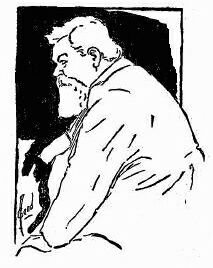 educational
instructor, and in 1866 was graduated from the Atlanta Medical college.
He returned to his old home in Twiggs county, where he has since practiced
his profession. Dr. O'Daniel is a member of the State Medical association,
of which he is ex-president; a member of the American Medical association,
of the Tri-state (Georgia, Alabama and Tennessee) Medical association,
member of the National Association of Railway Surgeons, was a member of
the Ninth International Medical congress, and was a delegate from Georgia
in 1893 to the Pan-American Medical congress, and which met in Washington,
D.C. He has frequently been a delegate f rom Georgia to the meetings of
the American Medical association, and is a member of the Macon Medical
association. Dr. O'Daniel has been a frequent contributor to medical journals,
principally the "Atlanta Medial and Surgical Journal.," and has read many
valuable papers before the State Medical association. He received the honorary
degree of A.M. some years ago from Emory college of Oxford, Ga., and the
degree of M.D. from the medial department of the university of Georgia,
located in Augusta, and the honorary degree of M.D. from the Kentucky school
of medicine in 1885. Dr. O'Daniel for many years solicited by friends to
permit his name to be used for public office, always declined, but finally
gave in in 1875, when he was elected state senator from the twenty-first
senatorial district, serving during the sessions of 1875-76-77. He also
served two years as clerk of the superior court of Twiggs county. In April
1891, Dr. O'Daniel was appointed by Gov. Northen principal physician to
the state penitentiary, which position he held until the spring of 1895,
when he resigned and returned to his farm. The compliment of his selection
was of the dignity of and honor, as there were a number of candidates for
the position. Dr. O'Daniel gave an excellent administration, his wide experience
and professional skill, together with his kind nature, enabling him to
effect several reforms which have long been commended by humanitarians
and the national prison reform congress. He is a Knight Templar Mason and
for many years was worshipful master of Twiggs lodge No. 164, F. &
A.M. He also belongs to Constatine chapter No. 4, royal arch Mason, and
St. Omar commandery No. 2, Knight Templars. He is a steward of Beech Spring
Methodist church in Twiggs county. Dr. O'Daniel was wedded Nov. 4, 1860,
to Elizabeth M., daughter of Henry Sand, a leading farmer of Twiggs county,
and to them were born two sons and one daughter, who now survive. His sons
are Dr. Mark H , O'Daniel, of Macon, who was for eight years assistant
physician in the insane asylum at Milledgeville, and Dr. William O'Daniel,
who succeeded his brother to the place mentioned. His daughter is Miss
Mollie L., who was graduated from the Wesleyan Female college at Macon.
A fine county residence is the home of the eminent citizen and physician
who, when desirous of freeing himself from the exactions of a public career,
can find retirement by his fireside and the enjoyment of all the pleasures
and contentment of a happy domestic life.
educational
instructor, and in 1866 was graduated from the Atlanta Medical college.
He returned to his old home in Twiggs county, where he has since practiced
his profession. Dr. O'Daniel is a member of the State Medical association,
of which he is ex-president; a member of the American Medical association,
of the Tri-state (Georgia, Alabama and Tennessee) Medical association,
member of the National Association of Railway Surgeons, was a member of
the Ninth International Medical congress, and was a delegate from Georgia
in 1893 to the Pan-American Medical congress, and which met in Washington,
D.C. He has frequently been a delegate f rom Georgia to the meetings of
the American Medical association, and is a member of the Macon Medical
association. Dr. O'Daniel has been a frequent contributor to medical journals,
principally the "Atlanta Medial and Surgical Journal.," and has read many
valuable papers before the State Medical association. He received the honorary
degree of A.M. some years ago from Emory college of Oxford, Ga., and the
degree of M.D. from the medial department of the university of Georgia,
located in Augusta, and the honorary degree of M.D. from the Kentucky school
of medicine in 1885. Dr. O'Daniel for many years solicited by friends to
permit his name to be used for public office, always declined, but finally
gave in in 1875, when he was elected state senator from the twenty-first
senatorial district, serving during the sessions of 1875-76-77. He also
served two years as clerk of the superior court of Twiggs county. In April
1891, Dr. O'Daniel was appointed by Gov. Northen principal physician to
the state penitentiary, which position he held until the spring of 1895,
when he resigned and returned to his farm. The compliment of his selection
was of the dignity of and honor, as there were a number of candidates for
the position. Dr. O'Daniel gave an excellent administration, his wide experience
and professional skill, together with his kind nature, enabling him to
effect several reforms which have long been commended by humanitarians
and the national prison reform congress. He is a Knight Templar Mason and
for many years was worshipful master of Twiggs lodge No. 164, F. &
A.M. He also belongs to Constatine chapter No. 4, royal arch Mason, and
St. Omar commandery No. 2, Knight Templars. He is a steward of Beech Spring
Methodist church in Twiggs county. Dr. O'Daniel was wedded Nov. 4, 1860,
to Elizabeth M., daughter of Henry Sand, a leading farmer of Twiggs county,
and to them were born two sons and one daughter, who now survive. His sons
are Dr. Mark H , O'Daniel, of Macon, who was for eight years assistant
physician in the insane asylum at Milledgeville, and Dr. William O'Daniel,
who succeeded his brother to the place mentioned. His daughter is Miss
Mollie L., who was graduated from the Wesleyan Female college at Macon.
A fine county residence is the home of the eminent citizen and physician
who, when desirous of freeing himself from the exactions of a public career,
can find retirement by his fireside and the enjoyment of all the pleasures
and contentment of a happy domestic life.
Memoirs of Georgia
Volume 1Historical Society of Georgia, 1895
JOHN
CAREY SHANNON
planter of Jeffersonville, Ga, was born in Columbia,
Mo., July 22, 1853. His father James Shannon, was born in 1799 in Ireland,
and in 1821 came to Liberty county, Ga. He then began a career which proved
to be one of exceptional usefulness, through a period of years ending in
1859. He had been well educated in the Royal institute at Belfast, and
as the time of his coming to American was preparing for the ministry in
the Presbyterian church. He is described at that time as being "quite youthful
in appearance, very affable and refined in manners, and deeply pious. he
was fond of company and took great pleasure in vocal and instrumental music,
being an excellent performer on the violin." He was very popular as a preacher
and teacher. He acted as assistant at the Sunbury academy the first year
and in the fall of 1822 took sole charge. As stated, he was preparing for
the ministry of the Presbyterian church, and the presbytery had set the
time for his ordination. It had been suggested to him by his pastor, Dr.
McWhir, to select for his ordination sermon "Was John's Baptism Christian
Baptism?" In his study of this theme, and in his preparation for the sermon,
the young professor succeeded in thoroughly convincing himself that he
should be ordained to the Baptist ministry, rather than the Presbyterian,
and so announced his determination, much to the surprise of his friends.
He was baptized soon after, and was received regularly into the Baptist
ministry. He taught and preached until 1825 in Liberty county and then
took regular work in Augusta, where he preached four years, receiving the
largest salary ever given to a Baptist minister of Georgia up to that date,
and also taught languages in Franklin college, Athens, Ga., being the first
Baptist to hold a position in that institution. Serving in that capacity
several years, he was then made president of the state university of Louisiana
at Jackson, and later of Bacon college at Haroldsburg, Ky. From this place
he removed to Columbia, Mo where he acted as president of the state
university until his death, which occurred in February of 1859. Of him
the Rev. J. H. Campbell, who knew him intimately, says" "He was the best
general scholar I have ever known. He took most pleasure in the dead languages,
but there was no field of literature, nor a branch of science, with which
he was not familiar." In the fall of 1823 he was married to Evelina Dunham,
in Liberty county, and they became the parents of three children, only
one now living, Mrs. Ann N. Douglass, of Columbia, Mo. His wife died at
Jackson, La., November, 1836, and in the following June of 1837 he was
married to Miss Frances Carey Moore, daughter of Alsa Moore, of Athens,
Ga., and by this union are the following living children: Dr. Richard
Shannon, of Joplin, MO., eight years state superintendent of pubic schools
in that state; John C., Jeffersonville, Ga.; L. D.. of Jeffersonville,
Ga.; and Mrs. W.N. White, of Centralia, Mo. The mother of these children
died in March of 1865, and both parents lie buried at Columbia, Mo. John
C. . Shannon was reared in Columbia. After his mother's death he came to
Georgia, and entered the employ of Col. Daniel Hughes, of Twiggs county,
with whom he remained a number of years, finally settling on the beautiful
plantation he now cultivates. Dec. 1, 1878, he married Virginia F., daughter
of Wm. Faulk. This gentleman now lives with Mr. Shannon. He was born in
Twiggs county Aug. 1, 1822, and is the son of Mark Faulk. During the late
ware he served in the state legislature, and relates many incidents of
that stirring time. He married Virginia Solomon, a daughter of Henry Solomon.
She died in 1861, the mother of three children, of whom Mrs. Shannon and
another sister survive. To Mrs. Shannon have been born six children, of
whom there are five living: J. C., Jr,; Ethel B., Wm. F., Jas. S., and
Laura. Mr. Shannon is one of the most extensive planters in the county,
and also a leading factor in its public life; is a democrat in politics,
and a member of the Christian church. Memoirs of
Georgia Volume 1 Historical Society of Georgia, 1895
LENOIR
DOUGLASS SHANNON
lawyer, Jeffersonville, Ga. This gentleman is
the son of Dr. James Shannon, for long years a leading educator of the
south and later of Missouri, mention of whom is made elsewhere, and was
born in Canton, Mo., April 30, 1858. He was reared in Columbia Mo., and
there received his early education at Christian college. Later he attended
the academy at Cabaniss, Monroe Co., Ga., and the state university of Missouri,
and thence came to Jeffersonville, where he was admitted to the bar in
1886. He has since pursued his profession with a marked degree of success.
Though not a politician in the sense of seeking office Co. Shannon is looked
upon as a man of note in his county and with a future before him. In 1888
he was chosen by the democratic executive committee; the senatorial democratic
executive committee; and also on the county executive committee. He, however,
displays greater interest in the practice of his profession, and is rapidly
acquiring a state-wide reputation. He bids fair to honor the name of his
illustrious father. Memoirs of Georgia Volume
1 Historical Society of Georgia, 1895
Please see web information
posted below. Mr. Lenoir Douglass Shannon, affectionately known to his
nieces and nephews as "Uncle Nonie," was born on 30 April 1858 in Canton,
Missouri, his father, James Shannon, having died on 25 February 1859. Lenoir
Douglass Shannon is buried in the Faulk Family Cemetery near Old Marion
Community in Twiggs County, GA. (Poyner, Barry C. Bound to Slavery: Star
Bible Publications, Fort Worth, Texas, 1999.) Shannon Hart, great-niece
of Lenoir Douglass Shannon, son of Frances Carey Moore Shannon and James
Shannon
JOHN
GEORGE SLAPPEY
Robert Rutherford Slappey, the father of the
above, was a native of Jasper county, Ga., and was born May 5, 1813. His
mother soon after the death of his father moved to Twiggs county, and here
Robert R. was reared and received his education. He married Miss Martha,
daughter of Matthew Exum, who, having borne him two children, one of whom
is living and resides in Twiggs county, died. To his second marriage eight
children were born, four of whom are living: R. R., Mark F., Henry Hubbard
and John G. The wife of the second marriage was Mary, daughter of Mark
and sister of Wm. Faulk. Mr. Slappey took and active interest in politics,
and was for several years a member of the state legislature. He was among
the foremost men of his county and assisted in the development which made
Twiggs county among the most prosperous in the state, prior to the war.
He was an old time whig, and for many years the only citizen of Twiggs
county who was the son of a revolutionary soldier. By economy and industry
he amassed quite a property during his life, and at the time of his death,
which occurred Nov. 15, 1890, he was considered one of the wealthiest men
of his section. John George Slappey was born in Twiggs county February,
1854. He had the best educational advantages the state afforded, and is
a graduate of the Atlanta Medical college. In 1875 he located in this native
county and began the practice of medicine, which profession he still follows.
He is a very successful practitioner, and has established an enviable reputation
for himself both as a physician and a citizen. Aside from his practice
he has the care of a plantation of some 300 acres. Married to Anna, daughter
of Henry Carter, be became the father of three children: Mark F., Henry
C., and John G. The mother died November, 1892. A second marriage was solemnized
- the wife of this instance, being a daughter of Capt. John A. Coffee (see
sketch elsewhere). One child has been born to this union, Mary Ann. Memoirs
of Georgia Volume 1Historical Society of Georgia, 1895
DR.
JOHN G. SLAPPEY (Doughtery County, Ga.)
In the early forties Dr. John G.
Slappey removed from Twiggs County, Georgia, to this section of the state.
Slappey was the son of Henry Slappey, sergeant in the Continental Army,
and Ann Rutherford. His grandfather, Robert Rutherford, was a Colonial
Governor of North Carolina and a member of the First Provincial Congress,
held in Hillsboro, N.C., and was also the first judge of Chatham County.
Dorothy Anne Brook was his grandmother. Dr. Slappey resided a part of the
time in Albany, and the remainder on one or another of his plantations.
Dr. Slappey was
both a successful physician and a noted surgeon and was in great request
throughout this section of the country. He made the long drives through
the country in the high two-wheeled gig used by the doctors in that day
and was attended by a servant on horseback who carried not only his instruments
and medicines but suitable food for such patients as might stand
in need of it. A man of great kindness of heart, he was honored and beloved
by all.
At the time of his death in
1864, Dr. Slappey was living on his plantation in Baker County, which is
still in possession of a member of the family. The descendants of his only
son Henry Slappey, still live in this county. Besides those who bear the
Slappey name are: Mrs J. W. Gillespie, Mrs. Walter Hill Wightman, and Mrs
John Stephen Inman; and Mrs. Sibert Houston Jones, of Augusta, Ga. and
their children. History and reminiscences of Dougherty
County, Georgia. Albany, Ga.. Herald Pub. Co. 1924.
ROBERT
R. SLAPPEY
This gentleman is the eldest of eight children
of Robert R. Slappey, and was born in March of 1845. he was reared in his
native county of Twiggs and received but an ordinary schooling. In 1861,
when the call came for men to fight for the rights and protect the homes
of southern people, he was among the fist to respond by enlistment. A member
of the Twiggs guards under Capt. Barclay, he participated in some of the
most hotly contested battles of the war, Yorktown, Wilderness, Spottsylvania,
Richmond, Malvern Hill and Fredericksburg being among the most important
of these. In 1863, on account of ill health, he was discarded, but again
enlisted after four months a s a member of Company E., Hampton cavalry
of Bibb county, and served till the close of the war. After the surrender
he returned home, and in November of 1865, he accepted the position of
agent of the Southern Express company, and of the then E. T. V. & G.
railroad, in which capacity he stills serves, much to his credit and the
satisfaction of his employers. He also conducts a plantation of 2,500 acres.
By the good management Mr. Slappey, his father's estate, which at the close
of the war was in an impoverished condition, was saved to the family. He
is one of the substantial democrats of his county, and in faith a Methodist.
His wife was Miss Virginia Nelson of Twiggs county. She is a daughter of
John A. Nelson of that county, who is very highly esteemed as a citizen
and neighbor. To the marriage, which occurred in January of 1865, six children
have been born: Mary Lou, Wm. F., John Nelson, Robert R., Virginia P.,
and Jarrot M., who died in infancy.
Memoirs of Georgia
Volume 1Historical Society of Georgia, 1895
JAMES
C. SOLOMON
Rev. James C.
Solomon, pastor of the Baptist Church at Byron, Houston County, Ga., was
born January 28, 1861, in Twiggs County, Ga., and is a son of Judge William
L. and Avarilla E. (Fitzpatrick) Solomon, both natives of Twiggs County,
Ga. The father is a planter, and is a prominent citizen, having served
as a judge of the court for several years. He was born January 20, 1834.
He attended school at Emory College, Oxford, but left one month before
his graduation. He was married in 1858 to Avarilla Fitzpatrick, and these
parents have four children: John F., married to Miss Josie Whitehurst of
Twiggs County, Ga; Mary E., married in October, 1884, to Hon. S. E. Jones,
recently a member of the Georgia legislature; William W., manufacturer
of the O.W. Massey cotton gin, Macon, Ga., married to Miss Louise Massey,
April, 1887, and James C., our subject, who is the second child of the
above family.
James C.
Solomon received his education at Mercer, graduating with distinction in
1880. Later he attended the Atlanta Medical College, graduating in 1883
and receiving some of the prizes awarded at that commencement. He taught
school the winter of 1880-81, giving good satisfaction to his patrons,
and studied medicine at the same time. He began practicing medicine in
1883 at Twiggsville, and has since been practicing continuously. In November,
1887, be became pastor of the Baptist Church at Bryon, and since that time
he has filled the pulpit of that church, being the regularly installed
pastor, in addition to attending to his medical duties. He is pronounced
in his views, and is very successful in both of his professions. He was
married January 28, 1886, to Miss Maggie A., daughter of James D.
and Janie (Killen) Tharp, of Houston County, Ga. One child, Maggie Avarilla,
has made happy the home of Dr. and Mrs. Solomon.
Dr. Solomon is
a Master Mason, also a member of the Royal Arch degree,. Col. John Fitzpatrick,
the maternal grandfather of our subject, owned about 15,000 or 20,000 acres
of land, and at one time was very wealthy. He was one of the leading politicians
of his time, but had not the advantage of scholastic training, never having
attended school more that six months, but had a natural turn of mind
for the law, and was several times a legislator in his State.
Dr. Solomon, the
subject of this sketch, has about one thousand acres of land for sale,
in two plantations in Twiggs County, Ga. The land is well drained, remarkably
healthy, and has as good water running through it as can be found in the
State. It is especially adapted for fruit and pasture. Dr. Solomon is numbered
among the thriving, responsible, well-to-do citizens of his county.Biographical
Souvenir of the States of Georgia and Florida. Chicago, IL: F.A. Battey
& Company, 1889.
WILLIAM
L. SOLOMON
This gentleman is justly regarded as among the
leading citizens of Twiggs county, having been for years intimately associated
with all movements intended to promote its prosperity. The family were
originally from North Carolina, from which state they located in what is
now Twiggs county in the latter part of the last century. James, the father
of Wm. L.., was born here in 1800 and reared on a plantation. At eighteen
he packed his all in a bandana handkerchief, and started out to see what
the world contained for him. Going to Marion county, he entered a store
as a clerk, of which he later became a part owner. He merchandised for
some sixteen years, then bought a farm in Twiggs county and passed the
remainder of his days in cultivating the soil. He married Frances, daughter
of William and Mary E. Crocker, and reared a family of five children: James
C., died during the late war; Cindarilla, deceased wife of Paul Tarver;
William L.; Josephine, widow of C. R. Faulk, Perry, Ga.; Carey E., Montgomery
county, Ga. The father died while still in his prime, the mother subsequently
marrying H. L. Denard, by whom she had two children: Ervin and mary. Mrs.
Denard was a woman of shrewd business sense, and by her energy and
judgment quite a competency was accumulated. She died in 1888., William
L. Solomon was born in Twiggs county, Jan. 31, 1834. He was educated at
Emory college, attaining to the senior class, but not finishing the course.
He began farming the year before his majority and has ben true to his first
love with such persistency and intelligence as to place him in the
from rank of the agriculturist of middle Georgia; but as to theory and
practice he cultivate some 1,500 acres at present, and owns lands in adjoining
counties aggregating some 3,000 acres. Politically Dr. Solomon favors the
democratic party, but cares nothing for the emoluments of office. he is
a stanch Baptist, being a deacon in his local organization -Richland church.
The marriage of Wm. L. Solomon and Miss A. E. Fitzpatrick was happily consummated
in Twiggs county. Mrs. Solomon is a daughter of John Fitzpatrick and was
reared in the county of her birth. They became the parents of four children:
John F., Jeffersonville, a farmer; Jones C., a Baptist minister, South
Macon; William W., superintendent gin factory, Marseyville; Mary, wife
of E. Jones (deceased). These children were all given the advantage of
a collegiate course of study, and are filling honored positions in society.
Memoirs
of Georgia Volume 1,Historical Society of Georgia, 1895
WILLIAM B. TARVER
Twiggs county does not contain within her border
representatives of a more illustrious name than the one here mentioned,
this gentleman being the son of the noted Gen. Hartwell Hill Tarver, who
was a prominent military officer of the state during the 40's. Gen. Tarver
was born and reared in Old Dominion state, Brunswick county, and was a
descendant of a family of seven brothers participating in the revolutionary
ware on the patriot side. In young manhood Gen. Tarver became a resident
of Twiggs county and rapidly accumulated an immense property in lands and
slaves. Always of a military turn of mind, it was not until 1842 that he
took any prominent part, at which time his ability as recognized by his
election by the legislature of the state to be general of all of the militia
of Georgia, then a very prominent and important factor in the public life
of the state. Gen. Tarver continued in the public eye with acceptability
from that time until his death, which occurred in 1852, in Twiggs county.
Gen. Tarver was twice married, his first wife having been Miss Ann Wimberly,
a sister of Dr. Henry Wimberly, of Jeffersonville, of whom mention is made
elsewhere. Their children were Dolly, whose romantic marriage to the late
Gen. Colquitt is well remembered; Paul; Henry; Fred, and John. All of these
are deceased save Henry, who lives in Albany, Ga. The second marriage was
to Harriet, daughter of Henry and Nancy Bunn, who emigrated to Georgia
from North Carolina. Two children blessed this union: William B., the gentleman
whose name introduces this sketch, and Benjamin M., a resident of Chattanooga,
Tenn. This wife outlived the general some seventeen years, dying in 1879.
Both lie buried in Twiggs county. Wm. B. Tarver was born May 23, 1844,
in Twiggs county. He was in college in Virginia when the war cloud burst,
and hastening home he enlisted as a volunteer when but seventeen years
of age in Gen. Hampton's cavalry command, in which he served the entire
four years. He participated in nearly every pitched battle of the war,
and surrendered at High Point, N.C. with Wade Hampton's brigade. In 1863,
while home on a furlough, he was joined in matrimony to Miss Laura Wimberly,
a daughter of Dr. Henry W., before mentioned. But one child resulted in
this union, Caroline, now the wife of G. W. Jordan, Jr. , of Pulaski county.
Mr. Tarver's first wife died in 1868,. his present consort having been
Annie P. Weaver, daughter of Wm. M. and Lucia F. Weaver, of Slema, Ala.,
descended from Gen. Weaver of revolutionary fame. Six children have blessed
this union: Lucia H., Hartwell Hill, Benjamin M., Jr.,. Wm. B, Jr., Roseline
T. and Ann W/. Mr. Tarver is a worthy son of a worthy father, being held
in high esteem in the community where he has long resided. He cultivates
a plantation of 2,600 acres, and does it in such a manner as to secure
him the reputation of being one of the best planters in the county. Democracy
secures his suffrage, and the Methodist church his moral and financial
support. Memoirs of Georgia Volume 1,Historical Society
of Georgia, 1895
VINCENT
THARP
"A native of Virginia, was born in 1760, and
bore arms in the cause of his country towards the close of the revolutionary
war. His first wife was a Miss Rogers, by whom he had two children,
a son and a daughter. During his first marriage he removed to South Carolina,
and thence with his second wife, a Miss Persons, to Warren county,
in this State. Owing to the hardness of the times, and his being a poor
man, he learned the gunsmith's trade, and was said to be a superior workman.
Before he entered upon the ministry he acted as a magistrate in his neighborhood.
He was baptized into Briar Creek church, Warren county, and was also licensed
and ordained there, about the year 1800. He served that church as pastor
several years, also Sweetwater and Rocky Creek, in Burke county. Soon after
the purchase, which extended to the Ocmulgee river, he removed to Twiggs
county, where many of his descendants are still to be found, and who are
among the most respectable and wealthy citizens of the county. Among these
may be mentioned Rev. Charnick Tharp, a son, and Rev. B. F. Tharp,
(now of Houston county,) a grand-son.
He was a member and the pastor of Stone Creek
church, now one of the most flourishing churches in the State. That church
was gathered under
Rev. Henry Hooten, who resigned in favor of Mr.
Tharp. His labors here and elsewhere were owned of the Lord in the salvation
of many souls. To the time of his death he was moderator of the Ebenezer
Association. Benevolence and hospitality were prominent traits in his character.
He was always "careful to entertain strangers," and his house was the home
of God's people, of every name. He delighted in the society of certain
brethren, Polhill, Franklin, Ross, Rhodes, Baker, Maginty, Mercer and others,
by whom he was frequently visited. He died in 1825, in the triumphs of
that faith which he had so long preached to others. His end was peace."
Source: Campbell, Jesse H. (Jesse Harrison),
1807-1888
Georgia Baptists : historical and biographical
/ by J. H. Campbell
JOHN S. VAUGHN
an ex-representative of the legislature, and
at present postmaster, merchant and farmer at Vaughn, postoffice, Twiggs
Co., was born in the same county Feb. 11, 1852. He has spent his entire
life in agricultural pursuits, and deserves much credit fo the success
which has attended him. He operates landed interest aggregating 1,000 acres.
In 1894 he became the nominee of his party for the legislature, and was
easily elected over his populist opponent. He is a democrat of the old
school, and is doing himself and his county credit in the important position
to which he was chosen. Mr. Vaughn has been twice married. Emma J. Armstrong,
daughter of J H. of Pulaski county, became his wife March 11, 1875, and
to them were born six children, four of whom are living: John H., Herschel
J., Sallie E. and Wm. T. The mother of these children died march 25, 1889,
and Jan. 13, 1891, Mr. Vaughn married his present wife, Susie E daughter
of Felix Johnson, of Twiggs county. Surrounded with an interesting family,
with political honors and financial success attending him, Mr Vaughn has
much to look forward to in life.
Memoirs of Georgia Volume
1, Historical Society of Georgia, 1895
DAVID
WARE, JR.
Among the early settlers of Middle Georgia,
was James Ware, who came originally from Maryland, later from North carolina,
and settled in Twiggs County, when that was one of the frontier counties
of the State. He was a young man full of energy and ambition, and the country
being new, opportunities were not then lacking for the development of the
strong qualities of one's nature, and he, in time, from a leading
spirit of the frontier, found himself a large planter and a prominent citizen.
He represented his county in the State legislature several terms, and was
often placed on commission to settle questions as to disputed boundary
lines, to condemn property for public use, and to establish highways and
the like. One of his sons, David Ware, Sr., is the father of the subject
of this sketch. He was born in Twiggs County; has lived there, and in Laurens
County, all his life, devoting himself to agriculture, at which he has
ben successful, and is now one of Laurens County's good substantial citizens.
He married a Twiggs County lady, Evaline N. Glover, daughter of Thomas
Glover, who was a descendant of an old Maryland family that came to Georgia
about the same time James Ware emigrated there. To this union have been
born thirteen children, severn girls and six boys, four of whom are dead.
The second older of these boys, David Ware, Jr., is the one whose name
is placed at the head of this sketch. He was born in Laurens County, August
29, 1837. He passed his youth on his father's farm, and received a fair
school education. In 1878 he moved to Dublin and became interested in the
Dublin
Gazette, of which he became editor. He devoted the next five years
to this paper, and through it has best services toward the upbuilding of
Laurens County, and the town of Dublin. He was as successful at this as
men usually are at country journalism, but it is a well known fact that
country newspaper editors' labors are mostly labors of love. Mr. Ware,
feeling that there was something better in store for him, withdrew from
this paper, relinquished journalism, and having begun to read law in the
meantime, was admitted to the bar in January, 1995, and immediately embarked
in that profession. He has been steadily and successfully engaged at the
law ever since. He is now mayor of Dublin for a second term, and has taken
some little interest in politics generally, but has never been before the
people himself for any office. December, 1882, he married Miss Sidney A.,
daughter of Oran D. Lasseter, of Burke County, Ga., but he had the misfortune
to lose his wife in August, 1885.
As stated, Mr. Ware has given
his entire time to his profession since embarking in it. He believes in
the old maxim: "Keep your office and your office will keep you," and when
not engaged elsewhere he is usually found among his books. Biographical
Souvenir of the States of Georgia and Florida. Chicago, IL: F.A. Battey
& Company, 1889.
JOHN
LAWRENCE WILKINSON
Between 1802 and 1807
John Lawrence Wilkinson (b. Sept. 2, 1762) is thought to have emigrated
from North Carolina to Georgia with his wife Cristiana Luther and several
small children, stopping in Montgomery County, Ga., for an unknown length
of time, where his eight child, Lawrence, was born. In 1809 he moved into
Twiggs County, settling where the celebrated "Longstreet" road crossed
the Pulaski County line, (now the line of Bleckley County) about twelve
miles north of Cochran. This road was once noted for the superiority of
its aristocratic farmers. the house place contained about 1500 acres, including
some of the richest lands in that section. Cotton six feet high and
d other fine crops were raised here; some articles made by him, a neat
hand mallet, an iron wedge, and an old door made in 1830 or '40 before
there were any sawmills in the county, are prized possessions of his descendants.
The neat and legible handwriting in his old family Bible, perfectly
preserved, indicates that he was a man of no ordinary culture. In addition
to other business interests, he kept an Inn which, no doubt, was a popular
hostelry on that much travelled road. He is mentioned in Gilmer's History
of Georgia.
John L. Wilkinson died August
23, 1841 and was buried at his request about three quarters of a mile from
the old homestead on the banks of a creek and his grave marked by a large
pile of rocks. Cristiana Luther Wilkinson died Aug.. 13, 1855 and is buried
in Macon County near the home of her son Benjamin B., with whom she lived
at that time.
They were the parents of eleven
children:
(1) Micajah Wilkinson, b. Apr.
11, 1794; m. 2nd Catherine Phillips (2) Elizabeth, b. June 20, 1790; (3)
James, b. Nov. 30, 1797; (4) Washington Mayberry b. Jan. 27, 1800; (5)
John Jr. b. Mar. 4, 1802, m. Fannie Wynne; (6) Benjamin Benanael b. about
1804, m. Mary Ann Hall; (7) Thulia, b. Oct. 9, 1806, m. Josiah Whitehurst;
(8) Lawrence Goldwire (or Goulden) b. Nov. 15, 1808, m. Elizabeth Jane
Miller (9) William Green b. July 18, 1813, m. Eliza Ann King; (10) Susannah
Adkin b. May 2, 1815, m. (1st) Bryan Clark, m. (2nd) a Mr. Southwell. (11)
Calvin Robinson b. Mar. 22, 1820, M. Frances Field, who lived several years
in Chattahoochee County. Francis Field Wilkinson died in 1864, and she
and her infant are buried in Mt. Olive Cemetery at Cusseta, Ga.
The ninth child of John Lawrence
and Crisitian Luther Wilkinson, William Green Wilkinson, b. July 18, 1813
in Twiggs County, was married on June 16, 1836 to Eliza King of Pulaski
County, (b. Feb. 20, 1818) by the bride's great uncle Green Brown, Esq.,
Justice of Peace.
Three months before his marriage
Wm. Green Wilkinson joined the troops in Florida fighting the Indians.
At the end of this war he was honorably discharged and afterwards received
a grant of 160 acres in Florida, which he sold.
The first year after
his marriage he was overseer for his father in Twiggs County, but the urge
of rich lands to the westward soon caused him to follow his wife's parents
to Chattahoochee County, where in 1838 he settled on the west side of Ochillee
Creek on the road from Halloca to Cusseta.
History of Chattahoochee
County, Georgia, Rogers, N. K., Columbus, Ga.,
c1933
GENERAL EZEKIEL WIMBERLY
Short Title: GENERAL EZEKIEL
WIMBERLY BRIDGE DESIGNATED.
Law Number: No. 129
Origin: (Senate Resolution No. 17).
Type: A Resolution.
Full Title: To officially designate the name
for a bridge over Savage Creek on the highway between Tarversville, Twiggs
County, Georgia, and Bonaire, Houston County, Georgia, as the "General
Ezekiel Wimberly Bridge."
Whereas, General Ezekiel Wimberly was a pioneer
settler of Twiggs County, and moved from Washington County, Georgia, to
Twiggs County shortly after Twiggs County was created by a legislative
Act; and
Whereas, General Wimberly was a distinguished
member of the House of Representative of Twiggs County from 1811 to 1813,
a member of the State Senate from 1815 to 1828, and twice a Presidential
Elector; and
Whereas, General Wimberly, who was the son
and grandson of Revolutionary soldiers, also, for the cause of freedom
bore arms for his State and Country in the War of 1812. Commanding the
Twiggs Militia, he erected and garrisoned three forts along the Ocmulgee
River as frontier protection for the inhabitants. During his career, General
Wimberly held many important posts in the Militia as Major, 80th Battalion,
Georgia Militia in 1810; Lieutenant Colonel, Light Dragons, Twiggs County,
in 1813; Colonel of the First Class Militia of Major General Adams Division,
the Georgia Militia in 1814; Colonel of Fort Hawkins in 1814; Colonel of
the Third Regiment, Georgia Militia in 1815; Major General of the Sixth
Division, Georgia Militia from 1820 to 1840; and
Whereas, General Ezekiel Wimberly, gentleman,
soldier and statesman devoted many years of his illustrious life to Twiggs
County, the State of Georgia and his Nation.
It is therefore resolved by the Senate, the
House of Representatives concurring, that the bridge crossing Savage Creek
on the highway between Tarversville, Twiggs County, Georgia, and Bonaire,
Houston County, Georgia, is hereby designated and named the "General Ezekiel
Wimberly Bridge," and the State Highway Department officials and other
State agencies are directed that on all maps and publications, the said
bridge shall be referred to and designated as the "General Ezekiel Wimberly
Bridge," and the State Highway Department officials are directed to have
placed on or near said bridge, an appropriate sign indicating to the people
the name hereby designated.
Approval Date: Approved March 9, 1956.
Source: Acts of General Assembly
CAPT.
FREDERICK DAVIS WIMBERLY
deceased, was born in Houston county, March
23, 1840, and removed with his parents to Twiggs county when he was four
years old. He was graduated from Mercer university, and in 1860 was married
to Miss Isrelene (sp) Minter, a daughter of Col. Wm. F. Minter, who was
sixty years old when killed in the last battle of the late war. Capt. Wimberly
responded to the first call for troops in South Carolina and was elected
second lieutenant in Gen. Tarver's command. He served through the entire
war and was promoted after the battle of Sharpsburg to captain for gallantry
on the field.. Six children were born to them: Col. W.M. Wimberly, Dr.
Warren Wimberly, Mrs. Richard D. Campbell, of Atlanta, Miss Clara, Isrelene;
Fred, Jr., died in youth. Capt. Wimberly died July 16, 1893. Mrs. Wimberly
is a lady of intelligence and considerable literary ability. Memoirs
of Georgia Volume 1, Historical Society of Georgia, 1895
DR.
HENRY S. WIMBERLY
Fred Davis Wimberly was a native of North Carolina.
He was the father of the following children: Ezekial, Henry, Moses, J.
R., Fred Davis, Betsy A., Allie L, all of whom are dead. Ezekial was born
Jan. 4, 1781, and died in 1825. He settled in Washington county, Ga., when
a young man of twenty-three years and became a planter. He married Dorothy
B., daughter of Henry Slappey, who was a revolutionary soldier and a native
of Holland. To this union there were born Annie R., who became the wife
of Gen. Tarver of Twiggs county; Fred D., Henry S., Eliza R. and Dorothy
M. The las two died in youth. The mother of these children died in February
of 1817. The wife of his second marriage was Miss Rebecca C.
Jones, who became the mother of six children, all of whom are dead. The
father of these and our subject, Henry S., located in what is now Twiggs
county in 1808. He started in moderate circumstances and very rapidly accumulated
vast wealth. He lived a very quiet life, was of a religious turn of mind,
and very highly respected. He was captain of militia and in politics an
old-time whig. He died Aug. 5, 1825, of yellow fever. Henry S. Wimberly,
the gentleman whose name heads this sketch, was born March 26. 1812. His
education was obtained in Jasper county, where was located the only academy
in the surrounding country. After his father's death he resided for one
year at Tarversville with Gen. Tarver. He then attended the medical college
at Augusta, Ga., and was one of seven pupils. In 1832, he gradated from
the medical college of Philadelphia, Penn, and located in Twiggs county.
He at once began the practice of medicine, but after
two years he turned his attention to farming in Houston county, where he
owned a large plantation and purchased 1,500 acres in Twiggs county, where
he resides. His wife was a daughter of Hardy and Sabra Durham. To her were
born the following: John R., of Arkansas; Fred Davis, of Pulaski county;
Mary Eliza, of Wilcox county; Henry of Telfair county; Lula P. resides
at home. The mother of these children died in 1864. His second marriage
was to Mrs. E. L. Wharton. Their children are Wm. F. and Ezekial P., who
died Nov. 6, 1892, and two others died in infancy. The doctor has retired
from active life and is enjoying the result of a life of industry and well-directed
agricultural effort. A democrat of the old school he is in sectarian belief
a Methodist, of which denomination he has long been an honored member.
Memoirs
of Georgia Volume 1, Historical Society of Georgia, 1895
ISOLENE
MINTER WIMBERLY
There is a romance
about the confederacy that does not lose its interest as time wears on,
and volumes might be written of the brave heroic deeds of the Georgia women
at the time.
Among these as social
leader and greatly beloved woman was Mrs. Frederick Davis Wimberly, of
Twiggs county.
In her youth and beauty and
patriotism, she was an interesting figure, and presided over "Inglehurst,"
one of the oldest plantation homes in the south, to which she came as a
bride in 1860.
In the times that came
later and tried men's souls, she, in the absence of her husband, Captain
Wimberly, "at the front", became the president of the Soldiers Aid Society,
the arm of which was to supply comforts and clothing for the soldiers and
lint and bandages for the sick and wounded.
At one of these meetings
one of the men, who had stayed at home, teasingly said, "Mrs. Wimberly,
some day you will hear from Yorktown that Fred is dead." With fire in her
eyes she replied: "Well, I would rather be a brave man's widow than a coward's
wife."
The mainsprings of her
life were lofty ideals and high aspirations, and her broad, strong mind
impressed these upon her family, her friends and her servants.
In her beautiful
home she reigned for thirty-eight years, giving to her people from her
full heart a wealth of love and affection.
No one, white or
black, whatever his condition, was ever turned empty handed from her door,
and at her board, where governors and senators have sat as honored guests,
the wandering pilgrims of the road have received always an ever tendered
courtesy.
Mrs. Wimberly was
the mother of Hon. Minter Wimberly of Macon; Mrs. Orme Campbell, of Atlanta,
and Miss Clara Wimberly, of Inglehurst, Twiggs county, Georgia. The
Atlanta Constitution
Oct 7, 1906
J.
R. WIMBERLY
is a native of Twiggs county, was born in November
of 1843, and is the son of J. R. Wimberly, Sr. His earlier education turned
toward a course in civil engineering, but at the opening of the civil war
his father entered the service and he remained at home with his mother.
However, in 1863, he too enlisted in the state militia. At the close of
the war he became a physician, his father having been a very successful
practitioner. In 1869 he located in Jeffersonville and has since resided
there. His wife Adelaide was the daughter of Rev. W. R. Steely and granddaughter
of James Steely, a revolutionary patriot. Their marriage took place in
November, 1966. To them were born eight children: Fred C; J. R.; Albert;
Lucy G. now Mrs. Wall; and Mary; three died in infancy. The mother of these
children died Cot. 6, 1890. She was a woman of many virtues, a devoted
wife and indulgent mother, and a kind neighbor. Here loss was felt by all
who knew her. Mr. Wimberly is a consistent member of the Baptist church,
of which he is a deacon. he was elected ordinary of the county in 1885,
and has held the office for ten years, much to the satisfaction of the
people of Twiggs. Mr. Wimberly comes of an old and highly respected Georgia
family, whose different members have occupied positions of honor and trust
throughout the state. He himself is a man of the most unbending integrity,
and does much to refute that oft-repeated old expression that "the good
men died with the demise of our fathers. "Memoirs of Georgia
Volume 1,Historical Society of Georgia, 1895
SAMUEL
WADE YOPP
was born May 12, 1854, and is a native of Laurens
county, Ga., where he was reared. His education was such as to enable him
to become a successful planter, and he was received at the Dublin academy.
When a young man he and his brother conducted the large plantation of their
grandfather for many years. Afterward he became identified with the milling
industry in Twiggs county. Having for some time successfully conducted
a plantation for D. M. Hughes, he removed to his own, which he has since
profitably managed. In August of 1886, he married Ellen Elizabeth, daughter
of Robert A. Hill, of Twiggs county, a native of North Carolina.
To this marriage have been born three children: Nellie Francis, Myrtle
and Robert Hut. Mr. Yopp is a thorough democrat and was in 1895 a candidate
for the legislature, the opposing candidate being elected by a very small
majority. he and his wife are members of the Missionary Baptist church,
and stand well in the church and community in which they live. The grandfather,
Samuel Yopp, was a native of North Carolina, and when but a young man located
on a plantation in Laurens county, near Turkey creek. he married Elizabeth
Hausly, who was also a native of North Carolina. Memoirs
of Georgia Volume 1,Historical Society of Georgia, 1895
Eileen Babb McAdams Copyright 2004