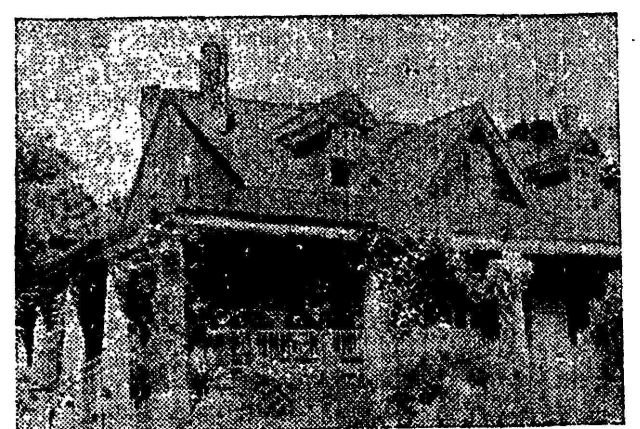
Inglehurst, Plantation Home
of Bunn - Wimberly Families
The plantation of over 5,000 acres
was located near Adams Park in southwestern Twiggs.
The railroad ran through a portion of it..
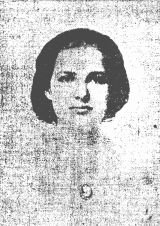
A 1900 Atlanta newspaper article about Miss Clara Wimberly returning home to Twiggs County describes the home. "the house was built by Rev. Henry Bunn, who prided himself in the fact that the materials of the entire house came from his own estate. The timber came from his lands and was made ready in his planing mills. The bricks were burnt from the clay on his estate and the lime was likewise his. Only his own workmen, carpenters and builders were employed; he was his own architect and directed the building. The only woodwork on the house not native to Georgia was the mahogany furniture, and the mahogany staircase, which was taken from the home of Dr. Bunn's grandfather in Virginia - one of illustrious colonial fame. The library, which is an apartment separate from the house, is one of unusual interest, containing books and manuscripts of great historic value besides ancestral portraits represent several generations of Miss Wimberly's paternal and maternal families."
Atlanta Constitution
Dec. 31, 1909
"INGLEHURST LOST; RELICS BURNED
Wimberly's Ante-Bellum Home Burned.
Information was
received yesterday that Inglehurst, the ante-bellum home of the Wimberlys,
in Twiggs county, had been burned. Just how the fire occurred is not known.
A telegram to R. O. Campbell from John Slappey told of the burning.
This means the passing
of another central Georgia landmark, noted for generations for its unlimited
hospitality. It was the ancestral home of Minter Wimberly, of Macon; Mrs.
R. O,. Campbell, Miss Clara Wimberly, Mrs. Isolene Robbins, of Selma, Ala.,
and the late Dr. Warren Wimberly.
After the civil war it
was occupied by heir father, Captain Fred D. Wimberly. Prior to the war
Twiggs county was one of the most aristocratic communities in the state
and numbered among its families the Travers (Tarvers), Colquitts, Wimberlys,
Slappeys, Solomons, Bunns, Glovers and Faulks. In fact, it might be said
that the county was owned by these families, each of which had its establishment
commensurate with the customs of that day.
Inglehurst was
conspicuous architecturally, representing the true colonial type. Although
the ware made a shift in the fortunes of those who survived, it did not
diminish the hospitality of Inglehurst. While probably not so lavish, this
hospitality was just as genuine as in the days of the slaveholder. For
many years Inglehurst was the social headquarters of that section.
It has been the
custom in recent years for members of the family to hold a Christmas reunion
there, but after the death of Dr. Warren Wimberly this custom was discontinued.
The loss comes with peculiar
force to Miss Clara Wimberly, who is now the guest of Mrs. Campbell. Mirrors,
mahogany furniture and other ancestral relics of the old house were the
property of Miss Wimberly."
copyright Eileen Babb McAdams 2004